Lessons
» Meta-Programmes II (31)
» Well-formed goals (32)
» Time-Line I (33)
» Time-Line II (34)
» Position 1-2-3 (35)
» Resource Circle (36)
» Sleight of Mouth I (37)
Audio/Video Contributions
» "Internal" and "External"
» Formulate Goals
» Sensory-specific concrete goals
» Timeline Introduction
» Timeline journey
» 1-2-3 Positions
» Sleight of Mouth
Text Articles
» History of MP
» Formulate Goals
» In- and Through-Time
» Timeline application
» Meta-Mirror
» Resource Circle
Success Checks
» Testing 01
» Testing 02
» Testing 03
» Testing 04
» Testing 05
» Testing 06
» Testing 07
Sleight of Mouth (1)
Sleight of Mouth patterns consist of linguistic categories and distinctions that help change or transform core beliefs with words. They can be referred to as verbal reframings that influence beliefs. They form the mental maps on which beliefs are based. These patterns are not easy to teach, as they are abstract and linguistically complex. Words are surface structures that represent deeper thought structures. To truly understand Sleight of Mouth, one must internalize this deep structure – otherwise, one only imitates examples. The real magic occurs when one touches the meaning level behind the words.
The term Sleight of Mouth is derived from Sleight of Hand – "magician's tricks". The word "sleight" comes from the Old Norse word for "clever" or "skillful". Just like in card magic, something seems to disappear: "Now you see it – now you don't." Just as the card transforms, verbal patterns also change perception and meaning.
Essential in NLP is that our nervous system (Neuro) is closely linked to language (linguistic). Our mental strategies (Programs) consist of neural and linguistic patterns. Richard Bandler and John Grinder described these principles in their book The Structure of Magic.
Language shapes our thinking. On one hand, we use it to represent experiences – we think, reflect, practice. On the other hand, we share our world model with others – we speak, teach, write.
Bandler and Grinder emphasize that language is both: a tool for creating inner models and a means of communication. The Greeks distinguished two terms for this: Rhema – words for communication, Logos – words of thought and understanding.
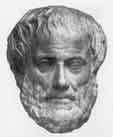
Aristotle wrote: "Language is signs and symbols of mental processes; writing, in turn, is a sign of language. The mental processes that they signify, however, are the same for all humans."
Aristotle's idea that words are "signs of mental processes" reflects the NLP thought: Language shows how we think – and it simultaneously shapes our thinking. Words are not random symbols, but powerful tools of consciousness. By understanding the deeper structure behind a person's words, we recognize and change their inner processes. Language is therefore not just a byproduct, but a central element of our mental experience.