Lessons
» Meta-Programs II (31)
Audio/Video Contributions
» "Internal" and "External"
Success Checks
» Testing 01
» Testing 02
» Testing 03
» Testing 04
» Testing 05
» Testing 06
History of Meta-Programs (2)
The foundation of the Meta-Programs is largely based on the work of C.G. Jung, as described in his book “Psychological Types” from 1923. Jung dealt with the assignment of a person to certain types in order to predict personality and thus behavior. In his view, all people are individuals, who, however, show similarities in some functions of their behavior. These similarities allow for a prediction of future behavior. It depends on the preferences of the person. The concept of preferences or inclinations forms the basis of Jung's type theory. Every individual has a preference, how they perceive and judge things. There are two types of perception and judgment. One can either perceive through the five senses (sensory perception) or perceive intuitively (intuitive perception). One judges either analytically (analytical judgment) or emotionally or based on personally subjective categories (emotional judgment). This results in four types.
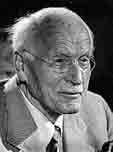
Jung expanded his theory and showed that these functions are guided by the attitude with which someone experiences the world. One has either a preference for the outer world of people and things and then speaks of an outward-oriented or extraverted attitude, or a preference for the inner world of ideas and thoughts and then speaks of an inward-oriented or introverted attitude. Jung thus identified eight different personality types, as each of the two perceiving and judging functions can appear in an extraverted or an introverted attitude.
Jung did not state that a person is exactly “so” and will therefore behave “so”, but he wanted to show that someone has a recognizable and determinable inclination and that this can manifest in a specific situation in a very particular way (at least directionally). This inclination (preference) causes a predictable process. The psychological types identified by Jung do not describe how and what a person is, but rather which processes are taking place within them.

Isabell Briggs-Myers and Katherine Myers continued Jung's work and developed the so-called Myers-Briggs Type Indicator (M.B.T.I.), a personality profile system, which is still used in business today. They ultimately supplemented Jung's model with a fourth scale, which describes the attitude towards the functions of judgment and perception. Based on this, one could find out which function is dominant and which is supportive. This expanded the number of types to 16. In 1942, the two women compiled a series of questions, to better determine the individual types.
The four preferences identified by the M.B.T.I., based on Jung's findings, form the four simple Meta-Programs. These fundamental Meta-Programs were expanded by Leslie Cameron-Bandler. She distinguished about 60 different programs. A student of hers, Rodger Bailey, translated some Meta-Programs into the business context and developed the so-called LAB Profile. This profile is based on 13 Meta-Programs, which are divided into the two categories of motivation and work style.