Time Frame (Time Frame / temporal reference / time perspective)
Definition
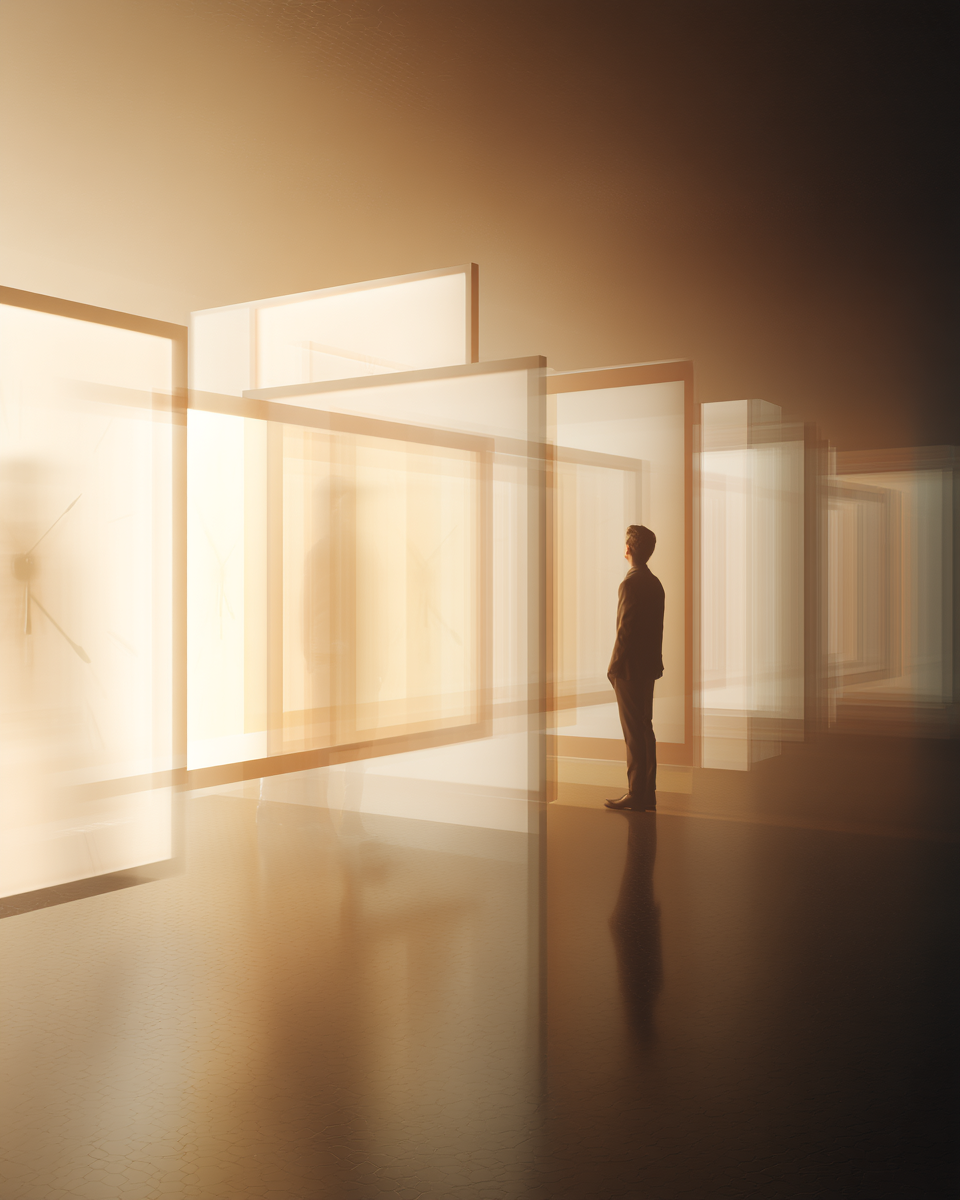
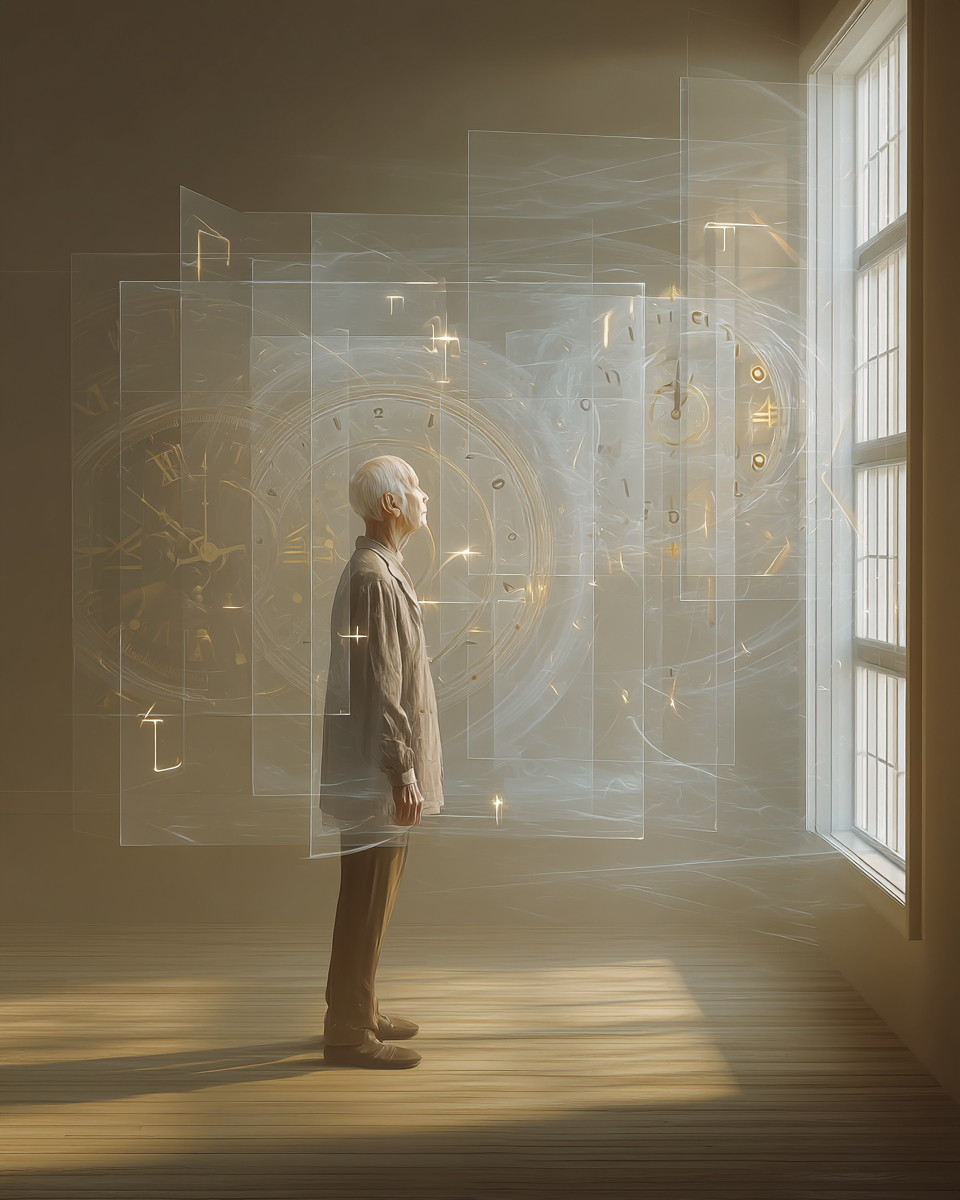
In NLP, the term „Time Frame“ the temporal reference of a feeling, an action, or a thought. Emotions and mental processes can relate to different time periods – past, present, or future. The time frame significantly influences how people perceive, evaluate, and respond to their experiences. For example, „Regret“ is often associated with the past, „Restlessness“ with the present and „Expectation“ with the future.
Origin and Theoretical Background
The concept of the Time Frame is based on the realization that the temporal context, in which a feeling or thought is experienced, strongly influences a person's interpretation and emotional reaction. In NLP, the time frame is used to analyze and change the inner structure of experiences. A central tool is the Timeline, with which one can consciously make and flexibly shape the perception of past, present, and future. Thus, a feeling that was originally tied to the past can be transferred into a resource-oriented future frame.
Application Examples
- In Coaching: A client says: „I constantly feel restless.“ → Frage: „Does this restlessness relate to the present or to something that might happen in the future?“ → Goal: To make the time frame of the feeling conscious and to work on it purposefully.
- In Therapy: A person expresses: „I regret my decision.“ → Frage: „What exactly do you regret from the past – and how would you like to deal with it in the future?“ → Goal: To shift the focus from the past to the future in order to create room for action.
- In personal development: Through conscious work with the time frame, hindering emotions can be transformed and new perspectives gained.
Areas of Application
- Therapy: Changing negative emotions by adjusting the temporal reference.
- Coaching: Promoting goal orientation and action capability through conscious focus on future frames.
- Communication: Clarifying temporal references in statements to avoid misunderstandings.
- Conflict resolution: Analyzing emotional reactions in relation to past events or future expectations.
Methods and Exercises
- Identify time frames: Analyze a feeling or statement and determine whether it relates to the Past, present or future .
- Changing the time frame:
Ask targeted questions to shift the temporal reference, e.g.:
- „How would this feeling change if you focus on the future?“
- „What happens if you only consider the problem in the here and now?“
- Using the timeline: Visualize your personal timeline and shift the focus of a feeling from one time area to another. Observe how the emotional perception changes.
Synonyms or Related Terms
- Temporal reference
- Timeline
- Time perspective
Distinction
Der Time Frame differs from the general Timeline in NLP in that it specifically focuses on the emotional or cognitive reference of a feeling or statement to a specific time area (past, present, or future). While the timeline is a spatial representation of the sense of time, the time frame describes the content reference point of an experience.
Scientific or Practical Benefit
- Individually: Making the temporal reference conscious helps to better understand and manage emotions.
- Practically: Supports people in transforming hindering feelings into productive energy.
- Scientifically: Anchored in cognitive and emotional theories of time perception and its influence on behavior and motivation.
Criticism or Limitations
- Subjectivity: The time frame of a feeling is individual and can vary depending on interpretation.
- Complexity: Not all feelings can be clearly assigned to a specific time frame.
Literature and References
- James, T., & Woodsmall, W. (1994). Timeline Therapy and the Basis of Personality. Crownhouse Publishing, Carmarthen.
- Bandler, R., & Grinder, J. (1975). The Structure of Magic I. Science and Behavior Books, Palo Alto.
- Andreas, C. & Andreas, S. (1987). Heart of the Mind: Engaging Your Inner Power to Change with NLP. William Morrow and Company, New York.
Metaphor or Analogy
The time frame of a feeling is like a camera lens:
You can decide whether to focus on a moment in the past, sharpen the present or take a look at the future. The chosen perspective determines, how how you experience the scene and what meaning you give it.