Virginia Satir - the renowned family therapist
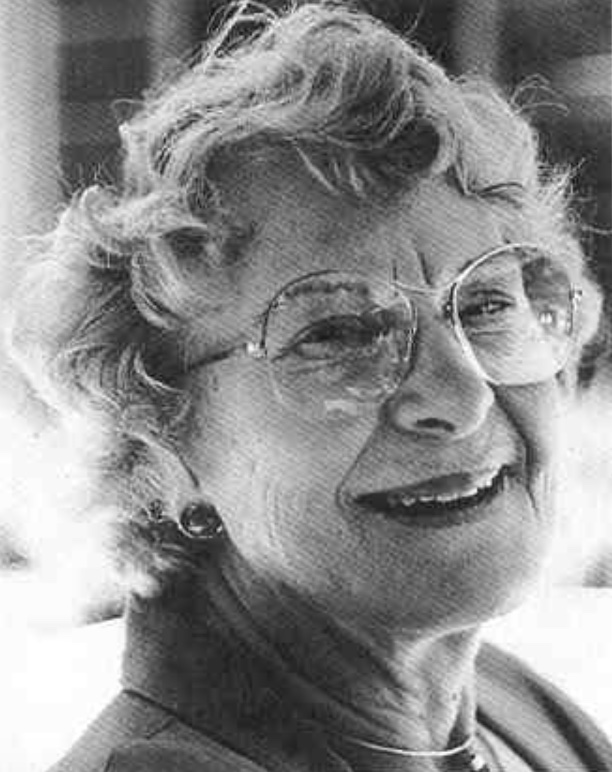
Virginia Satir (1916–1988) is considered one of the most influential figures in the field of family therapy and humanistic psychology. She is often referred to as the "Mother of Family Therapy" and has fundamentally changed the way family communication and personal growth are understood through her work. Satir's approach emphasizes the importance of self-esteem, empathy, and clear communication in interpersonal relationships.
Childhood & Youth
Virginia Satir was born on June 26, 1916, in Neillsville, Wisconsin, as the oldest of five siblings in a strictly religious family. Her parents were devout Methodists who valued morality, order, and community. Her father was a simple, uneducated worker, while her mother came from a respectable bourgeois background and placed a high value on education. Even in her youth, Satir showed a pronounced sensitivity to the needs of others and a strong desire to help them. Due to the different backgrounds, there was much conflict between her parents, which they never expressed in front of the children. Nevertheless, the difficult relationship between the parents was always subtly felt. The father tried to cope with his problems through alcohol. Also, due to the challenging family environment, Virginia Satir wanted to become a "family detective" by the age of five. She took on responsibility within her family early on and became a trusted confidante for siblings and friends in crisis situations. These experiences shaped her view of human relationships and laid the foundation for her later work as a therapist. Despite the conservative family environment, she developed a progressive attitude towards interpersonal communication and personal freedom, which she upheld throughout her life.
Education & Academic Career
Satir's education began at the Milwaukee State Teachers College, where she specialized in education and graduated in 1936. She initially worked as a teacher but quickly realized that she wanted to have a more direct impact on people's lives. Therefore, she decided to study social work, including at the University of Chicago, where she acquired in-depth knowledge in psychology and psychotherapy. Her further training at the Chicago Institute for Psychoanalysis in the 1950s brought her together with significant psychoanalysts and expanded her therapeutic horizon.
In the 1960s, Satir co-founded the renowned Mental Research Institute (MRI) in Palo Alto near Stanford, California, a center considered the birthplace of systemic family therapy. There, she worked with other pioneers like Paul Watzlawick and developed innovative methods that shifted the focus from individual psychopathology to viewing families as dynamic systems. Later, she served as a professor at the University of California, Los Angeles (UCLA), where she passed on her knowledge to a new generation of therapists.
Development into a Family Therapist
After graduating from the University of Wisconsin in 1936 as a teacher, Virginia Satir began her professional journey with great idealism. She completed training as a social worker at the Chicago Institute for Psychoanalysis, deepening her knowledge of interpersonal dynamics. Following this training, she opened a private practice where she initially treated only indigent patients, as she had no access to other paying patients as a non-medical professional.
Between 1955 and 1958, Satir held a teaching position at the Illinois State Psychiatric Institute in Chicago. At the same time, she ran two private practices, was involved in a school center, and worked as a freelance consultant for a company -- an early example of her ability to connect clinical, educational, and systemic perspectives.
A milestone in her career was the founding of the Mental Research Institute (MRI) in Palo Alto in 1959, together with Don D. Jackson and Jules Riskin. The MRI became one of the most significant centers for family therapy and systemic therapy worldwide. There, Satir developed her characteristic "Conjoint Family Therapy" approach, where not individual family members, but the entire family was involved in the therapeutic process simultaneously -- a revolutionary idea at the time.
From 1963, Virginia Satir worked at the Esalen Institute in California, a center of the Human Potential Movement. There, she collaborated with significant figures such as Moshé Feldenkrais, Randolph Stone (Polarity Therapy), Jakob L. Moreno (Psychodrama), Alexander Lowen (Bioenergetic Analysis), Paul Goodman, and Fritz Perls (Gestalt Therapy). These interdisciplinary encounters shaped Satir's humanistic orientation and strengthened her holistic approach in family therapy. Particularly, Gestalt therapy and the experience of physical processes resonated in her work.
She began regularly holding therapy demonstrations and lectures in various U.S. states. Her style was characterized by human warmth, presence, and intuitive precision, which quickly earned her international recognition. In 1966, she left the MRI to fully dedicate herself to teaching, writing, and expanding her methodological approach.
Another notable point in her career was her meeting with Richard Bandler in 1972, one of the later co-founders of Neuro-Linguistic Programming (NLP). Satir's work became one of the cornerstones for the emerging NLP, particularly her methods for pattern recognition in communication, her handling of intra-family roles, and her techniques for reframing and resource utilization.
In the 1970s, she built relationships not only with international therapeutic colleagues but also maintained a close spiritual exchange with various indigenous peoples of North America. This spiritual connection became a significant resource for Satir in her personal and professional development -- she increasingly viewed healing as a transpersonal process that goes beyond mere technique and places human wholeness at the center.
A significant step was the founding of the "Avanta Network" in 1977, an international nonprofit organization. With this network, Satir aimed to bring together the therapists, counselors, and teachers she trained to enable cross-cultural peace work. Her goal was to spread skills for self-reflection, the development of self-esteem, and the improvement of human communication -- in schools, businesses, families, and governments.
The focus of the Avanta Network's work was:
- the promotion of self-esteem,
- the establishment of constructive communication patterns,
- and the development of a growth-oriented mindset that connects personal development and social peace.
In the 1980s, Satir was active internationally -- she held seminars, training sessions, and therapy demonstrations on several continents. A particularly significant moment was in May 1988 when she finally had the opportunity to present her work in the Soviet Union -- a long-held wish that she viewed as part of her vision for global understanding.
Just a few months later, on September 10, 1988, Virginia Satir passed away at the age of 72 in her home in Palo Alto, California, after a serious illness (cancer). She left behind a globally impactful legacy of humanistic, systemic, and spiritually oriented family therapy. The concepts of Virginia Satir continue to inspire numerous schools and therapeutic approaches today.
What Made Virginia Satir Special & Successful - Systemic Work
Virginia Satir was a pioneer of family therapy, whose approach was characterized by a holistic, human-friendly attitude and profound effectiveness. Her therapeutic work was based on the belief that every person has the ability to change and heal from within -- regardless of past life patterns or family influences. Her goal was to connect people with themselves, their families, and their inner potential.
A central element of her method was working with self-esteem. She assumed that almost all psychological difficulties are based on a distorted self-image. Instead of focusing on symptoms, she directed her attention to inner growth, relationship patterns, and the restoration of a person's self-esteem. In doing so, she integrated emotional, physical, and linguistic levels equally.
Some of her most well-known methods include:
- Family Sculptures: Members of a family or representatives are arranged in the room so that relationship dynamics become visually and physically visible. This often opened new emotional access points and brought unconscious patterns to light.
- Communication Model with Five Survival Attitudes (Soothing, Accusing, Rationalizing, Distracting, Congruence): This model served to raise awareness of protective mechanisms in stressful situations.
- Self-Esteem Model: She showed ways in which people can develop inner strength and build self-acceptance, even if they come from problematic families.
- Resource Activation and Positive Connotation: Problems were not pathologized but understood as expressions of an unfulfilled need. From this, she derived powerful, future-oriented interventions.
Satir's working style was characterized by a deep trust in human potential. Her sessions were often intense, creative, physically expressive, and emotionally liberating. She had the gift of showing dignity, hope, and room for action even in troubled family systems. Her goal was not only to resolve conflicts but to enable genuine, sustainable transformation.
What particularly distinguished her and earned her international recognition was her ability to make complex psychological processes accessible in clear language and with practical methods. Her books -- foremost "Conjoint Family Therapy" and "Peoplemaking" -- reached a wide audience and made her one of the most read therapists worldwide.
Moreover, she was a charismatic communicator who worked with warmth, presence, and humor -- direct, compassionate, and never didactic. People felt deeply seen and appreciated by her. Her therapeutic attitude was a radical departure from the deficit-oriented thinking of many contemporary schools and significantly contributed to the development of humanistic psychotherapy.
That Satir was regarded worldwide as one of the most successful representatives of her field was not only due to her expertise but also to the combination of the following factors:
- Pioneering role in family therapy, even before the systemic movement
- Global training work in over 60 countries
- Cultural adaptability of her methods
- Influence on adjacent fields such as NLP, coaching, education, supervision, and mediation
- Timeless models that are still used in many therapy schools and coaching training programs today
Virginia Satir thus became a symbol of an empathetic, holistic, solution-oriented psychotherapy that focuses on growth rather than illness. Her legacy lives on in systemic therapy, in the humanistic movement, and in countless approaches based on the deep acceptance of humanity. Virginia Satir's systemic work inspired many people. Additionally, she trained numerous family therapists who continue her work today.
Influence on NLP and Other Areas
Virginia Satir's work had a profound impact on the emergence of Neuro-Linguistic Programming (NLP). Virginia Satir's work was intensively studied by Richard Bandler, who, together with John Grinder, modeled parts of her methods directly on Satir's empathetic and systemic approach. Particularly her emphasis on nonverbal communication, body language, and the inner attitude of a therapist strongly influenced NLP techniques. Satir's focus on self-esteem and overcoming communicative blockages added a humanistic dimension to NLP.
Furthermore, Satir shaped family therapy as an independent discipline and continues to influence therapy, coaching, counseling, and education today. Her holistic approach, considering emotional, social, and cognitive factors, is further developed in modern systemic and solution-oriented therapeutic methods. The Virginia Satir Global Network promotes her legacy internationally and supports further training based on her methods.
Virginia Satir's influence on modern psychotherapy is immeasurable. She fundamentally changed the understanding of familial and interpersonal dynamics and inspired numerous new therapy and counseling approaches. Her humanistic view of people, the emphasis on self-esteem and clear communication, as well as her methods for family reconstruction, are now integral parts of many therapeutic schools.
Her work laid the foundation for systemic thinking and influences not only family therapy but also coaching, supervision, and organizational development. Therapists, trainers, and coaches worldwide use her models to help people overcome personal blockages, build authentic relationships, and lead more fulfilling lives. The continuation of her work through the Virginia Satir Global Network ensures that her insights remain accessible to future generations.
On Self-Esteem & Co. - Her Fundamental Attitude
Virginia Satir's therapeutic work was not only methodologically innovative but was based on a deeply rooted humanistic and spiritual attitude. She saw people as fundamentally capable of growth, good, and able to change -- regardless of their past or current life situation. At the center of her approach was the conviction that emotional openness, interpersonal connectedness, and strong self-esteem are the foundation for healing and personal development.
This attitude was particularly impressively expressed in her famous "Five Freedoms." She formulated these as the goal of a successful therapeutic development:
- The freedom to see and hear what is really there in the moment
-- instead of what should be, has been, or will be. - The freedom to express what I truly feel and think
-- and not what is expected of me. - The freedom to stand by my feelings
-- and not pretend to be something else. - The freedom to ask for what I need
-- instead of always waiting for permission. - The freedom to take risks on my own responsibility
-- instead of always playing it safe and not daring to try something new.
Satir wanted to help people free themselves from fear, shame, and suppressed communication in order to be able to make real contact with themselves and others. On this basis, she developed a differentiated model for analyzing communication styles within family systems. She distinguished four destructive patterns that people often show in stressful or conflict situations:
- Soothing ("I do everything wrong"): The need for harmony leads to self-neglect.
- Blaming ("You never do anything right"): One's own pain is projected outward.
- Rationalizing / Being super-reasonable: Escaping into logic and intellectualization to avoid emotional insecurity.
- Distracting: Avoidance through inappropriate reactions or hyperactivity to gain attention.
Virginia Satir's Personal Life
Virginia Satir married Paul Satir in 1936, with whom she had five children. Despite her professional success, her life was not free from challenges: She repeatedly struggled with health issues and personal burdens, including the pressure to balance family and career. Nevertheless, she remained committed throughout her life and dedicated herself to her work with great passion.
Her death in 1988 from cancer was a great loss for the psychotherapeutic community. However, her legacy lives on, not only in her publications but also in the work of numerous therapists, counselors, and coaches who carry on her principles.
Quotes
"The problem is not the problem; the problem is how we deal with it."
"Feelings of self-worth can only thrive in an atmosphere where individual differences are valued, mistakes are tolerated, communication is open, and rules are flexible."
"I believe the greatest gift I can imagine receiving from someone is to be seen, heard, understood, and touched by them."
"We come together because of our similarities; we grow because of our differences."
Important Publications on Family Therapy by Virginia Satir
Virginia Satir wrote numerous influential books and articles, including:
- Peoplemaking (1972), a classic on human development and communication
- Conjoint Family Therapy (1964), the foundational work on systemic family therapy
- The New Peoplemaking (1988), a further development of her concepts with new exercises and methods
These works are still the basis for many psychotherapeutic and counseling professions today.
Sources
- Works by Virginia Satir: Peoplemaking, Science and Behavior Books, 1972; Conjoint Family Therapy, Science and Behavior Books, 1964; The New Peoplemaking, Science and Behavior Books, 1988
- Banmen, Jane et al. (Eds.): The Satir Approach: Family Therapy and Beyond, 2002
- Watzlawick, Paul et al.: The Interactional View, 1974
- Official website: https://satirglobal.org
- GoodTherapy.org -- Biography of Virginia Satir: https://www.goodtherapy.org/famous-psychologists/virginia-satir.html