Milton Erickson - Developer of Hypnotherapy
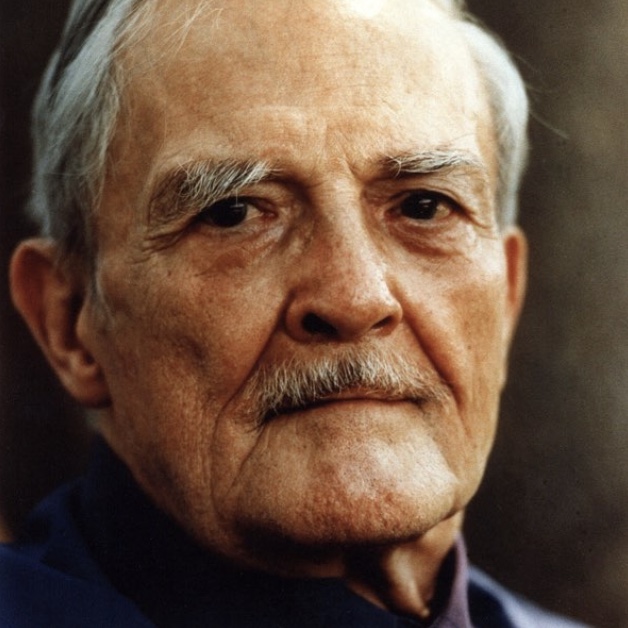
Milton Hyland Erickson was born in December 1901 in Aurum and is considered one of the most influential psychotherapists of the 20th century. He was a specialist in psychiatry, a psychiatrist, and a psychotherapist, but above all, he was the founder of modern hypnotherapy. His unusual, often paradoxical interventions, his brilliant observational skills, and his deeply individual approach to patients made him a legend in the therapeutic world. Erickson's approach was characterized by pragmatism, creativity, and a deep respect for the unconscious resources of human beings. Many of his methods are now considered the foundation of modern brief therapy, NLP (Neuro-Linguistic Programming), solution-oriented therapy, and coaching.
Childhood & Youth
Milton Hyland Erickson was born on December 5, 1901, as the second of nine children to Albert and Clara Erickson. His father was of Norwegian descent, and his mother belonged to an established family from New England. The family initially lived in the western USA but moved to Lowell, Wisconsin, in 1906, where Milton attended elementary school and later high school in Wishfield.
From an early age, Erickson stood out due to various challenges. He suffered from dyslexia, was colorblind, had no musical ear, and had difficulties with language comprehension. As a result, he was sometimes considered 'backward' in school. His nickname was 'Dictionary' because he always started reading the dictionary from the front when searching for a term -- a logical, albeit time-consuming strategy for him. To overcome his reading problems, he developed his own method: he imagined letters hallucinatively in his mind's eye and thus trained his visual imagination -- an early example of his creative use of inner processes, which later also influenced his therapeutic work.
In 1919, shortly after graduating from high school, he faced a severe stroke of fate: he contracted polio and fell into a coma. When he regained consciousness three days later, his entire body was paralyzed. The doctors gave him little hope. Unable to move, he sat in a rocking chair -- and one day noticed that the chair moved slightly, triggered by his desire to look out the window. This experience -- an ideomotor movement -- was a turning point for him. He began to consciously visualize how his muscles moved and thus trained his bodily functions -- purely mentally.
Through persistent mental practice and intense imagination, he was able to perform initial movements within a year. Eventually, he could walk with crutches. Contrary to medical advice, he soon undertook a 1,200-mile canoe trip on the Mississippi -- a journey that strengthened him physically and mentally. Two years later, he walked without crutches, with only a slight limp remaining on the right side.
These early experiences of physical limitation, mental self-healing, and the power of inner images shaped Erickson's entire therapeutic thinking. His conviction that the human mind possesses enormous resources for self-healing was based not on theory -- but on personal experience.
Education & Academic Career
After his remarkable recovery from polio, Milton Erickson began studying at the University of Wisconsin in Madison in 1921. There, he initially studied psychology and later also medicine. Even at that time, his extraordinary observational skills and interest in nonverbal communication became evident. He reported that during his studies, he spent hours observing people on the street to infer inner states from posture, facial expressions, and body language -- a skill he later masterfully applied in hypnosis and psychotherapy. In his second year at university, he came into contact with hypnosis. He was fascinated by the possibilities, practiced tirelessly, developed different techniques, and explored the possibilities of influencing people. In contrast to the prevailing teaching at the time, Erickson developed customizable methods.
In 1928, Erickson graduated with an M.D. (Doctor of Medicine). In 1930, he obtained an additional degree in psychiatry before working at Wayne State University in Detroit from 1930 to 1934. It is particularly noteworthy that Erickson completed his training at a time when academic psychiatry was heavily influenced by biologically-medical ways of thinking -- Freudian concepts or hypnotic procedures were considered marginal phenomena or even frowned upon in the American professional world. Despite this attitude, Erickson was not deterred from his practical experience and his deep conviction in the effectiveness of trance and suggestion.
After completing his studies, he went through a series of specialized positions. He completed his residency in psychiatry, among others, at Worcester State Hospital (Massachusetts), where he continued to engage with hypnosis under rather restrictive conditions. He later worked at several clinics, including in Rhode Island, Michigan, and at Eloise State Hospital. During his time at Eloise Hospital, he became known for his unusually successful treatment approaches with schizophrenia patients -- a field in which he later made groundbreaking contributions.
In 1948, Erickson was finally appointed clinical professor of psychiatry at the University of Arizona in Phoenix. He began to conduct extensive teaching and lecture activities and trained doctors, therapists, and psychologists in clinical hypnosis. While many of his early writings appeared in rather obscure medical journals, his work became accessible to a broader audience through the publication of case histories and transcripts by students like Jay Haley, Jeffrey Zeig, or Sidney Rosen. In this form, Erickson's influence later found its way into many modern therapy forms -- despite initial academic skepticism.
Career & Development of Hypnotherapy
After his medical degree in 1928 and his psychiatric training, Milton Erickson worked at several psychiatric facilities in the USA. One of his formative stations was Worcester State Hospital in Massachusetts, where he gained initial clinical experience with hypnosis. Unlike many of his contemporaries, Erickson did not view hypnosis as a mystical method but as a natural state that can be used therapeutically.
He developed his own approach early on: an indirect, permissive form of hypnosis that later became world-famous as 'Ericksonian hypnosis.' It was no longer about authoritative commands or standardized suggestions, but about actively working with the inner resources of the patient through stories, metaphors, paradoxical interventions, or subtle linguistic turns.
In the 1930s and 40s, he practiced as a clinic director and chief psychiatrist, among others, at Eloise State Hospital (Michigan), where he worked with many chronically mentally ill patients. His treatment approaches for schizophrenia and psychosomatic disorders were considered unusual but often successful. His methods were often radically experience-oriented, highly individualized, and far ahead of their time.
In 1958, he also founded the 'American Journal of Clinical Hypnosis,' which he published until 1968, and in 1978, the Milton Erickson Society for Clinical Hypnosis, which offers training and further education in clinical hypnotherapy, was established.
Despite multiple health setbacks -- including several relapses of polio -- Erickson was not deterred from his therapeutic work. In the last decades of his life, he primarily practiced from his own home in Phoenix, Arizona, which became a kind of pilgrimage site for therapists from around the world.
Significance
Milton H. Erickson left a profound impact on modern psychotherapy, particularly through his innovative use of hypnosis. Instead of authoritarian suggestions, he used subtle, indirect language patterns, metaphors, and stories to initiate changes in the unconscious of his clients. His individualized, respectful approach always emphasized the uniqueness of each person and their resources for self-healing.
It is thanks to Erickson that hypnosis was increasingly used in psychotherapy again after it had been pushed into the background for a long time due to Sigmund Freud's rejection. He developed a new approach that emphasizes the individuality of each client/patient and, consequently, the necessity of finding the appropriate approach and access for each. This approach contrasted with the standardized and authoritarian methods that prevailed until the 50s and 60s. Erickson also emphasized the positive role of the unconscious. Unlike Freud, for Erickson, the unconscious is an inexhaustible resource for creative self-healing. The unconscious is the repository of underutilized human experiences. Erickson's approach aims to expand the consciousness's ability, which is limited by rigid schemas and thought patterns, by allowing the hypnotist to enable the unconscious to take the leading role through special verbal and non-verbal techniques. At the same time, it allows the consciousness to accept and integrate the unconscious self-healing forces and creative resources.
Erickson had a tremendous impact on the entire therapeutic community and his successors. He influenced Jay Haley, Paul Watzlawick, John Weakland, and with them the entire Palo Alto group, impacted the family therapy that was being founded at the time, and many schools of systemic therapy, foremost the solution-focused approach of Steve de Shazer and Insoo Kim Berg, the provocative therapy of Frank Farrelly, and the systemic structural constellations of Insa Sparrer and Matthias Varga von Kibéd.
Influence on NLP
From the early 1970s, Erickson became known not only for his therapeutic successes but also as a model for a new generation of psychologists and communication experts. His indirect, linguistically highly differentiated communication style particularly fascinated two young Californians: Richard Bandler and John Grinder.
They began to systematically analyze extraordinarily successful therapists as part of their so-called 'modeling' -- including Fritz Perls, Virginia Satir, and Milton Erickson. Their analysis of Erickson focused primarily on:
- his precise use of language (Milton Model),
- his flexible handling of trance states,
- his ability to activate unconscious processes,
- and his strategic use of ambiguities, metaphors, and suggestions.
The result was a linguistically based model of hypnotic language patterns, known today as the Milton Model -- one of the central language pattern tools in NLP. It forms the counterpart to the so-called Meta-Model of language, which emerged from the analysis of Virginia Satir. Many NLP techniques, such as anchoring, reframing, swish techniques, or dealing with unconscious signals, can be traced directly or indirectly back to Erickson's therapeutic strategies.
Although he himself was not actively involved in the development of NLP, he is considered one of the three 'fathers' alongside Virginia Satir and Fritz Perls. His attitude of enabling change through inner processes and creative communication continues to resonate in psychotherapy, coaching, and counseling to this day.
Therapeutic Approach
Erickson's teaching style was as unusual as his psychotherapeutic therapies. He preferred small groups, often in his own living room in Phoenix. His demonstrations often consisted of anecdotes, case histories, or seemingly trivial stories that contained profound lessons.
He taught through experience, not theory. Many of his students reported that they often only understood months later what he wanted to convey with a seemingly casual sentence or a paradoxical exercise. His approach was characterized by respect, patience, and the conviction that learning occurs best through personal insight and not through instruction.
Erickson used metaphors, stories, humor, reframing, surprise techniques, paradoxical interventions, and symbolic tasks to initiate change processes. For him, the unconscious was not a source of disturbance but a source of resources, healing, and creative solutions.
Another key term in his work was utilization -- the consistent use of everything the patient brings: symptoms, language, peculiarities, resistances, habits. For Erickson, there were no obstacles, only potential for change.
Quotes
"People are not sick; they are just trapped in a certain way."
"If you want to change a person's behavior, you must reach their unconscious mind."
"Every change begins with a change in perception."
"The unconscious knows more than the conscious can suspect."
"Hypnosis is not when someone does something, but when someone allows something."
Personal
Milton H. Erickson married for the first time in 1925. This marriage produced three children. The marriage was divorced in 1935. Shortly thereafter, Erickson met his later wife Betty, whom he married in 1936. With her, he had five more children.
In 1947, Erickson suffered an injury from a bicycle accident that required a tetanus vaccination. Despite his known allergy to the vaccine, he got vaccinated, which led to a severe anaphylactic shock that he narrowly survived. As a result, he developed a strong allergy to pollen, which forced him to move to the milder climate of Phoenix, Arizona. There, he opened a private practice, which he later operated directly from home due to further allergies to house dust and various foods.
In 1953, Erickson again contracted polio, which was accompanied by muscular dystrophy. Despite these health setbacks, he continued his writing work and lecture tours as much as possible. During this time, he worked closely with prominent colleagues such as Jay Haley, Gregory Bateson, Margaret Mead, Lawrence Kubie, and John Weakland.
Due to his deteriorating health, Erickson gave up his lecture and travel activities in 1969 and his private practice in 1974. In 1976, he suffered another severe phase of polio, accompanied by muscle wasting and multiple pains. He subsequently became dependent on a wheelchair and suffered a partial facial paralysis.
Milton H. Erickson passed away on March 25, 1980, in his home in Phoenix, Arizona.
Milton Erickson was described by contemporaries as exceptionally resilient, humorous, and resourceful. Despite his severe physical limitations, he always displayed a strong will and a positive outlook on life, which was also reflected in his therapeutic work and made him a symbol of modern hypnosis. His ability to master his physical challenges with creative solutions impressed both family and colleagues. As a family man, he was committed and tried to maintain a close bond with his eight children despite the burdens of illness. Besides his work, Erickson appreciated nature and enjoyed long walks, which helped him strengthen both body and mind. His background from a Norwegian-American family in Wisconsin shaped his down-to-earth, yet humorous and practical nature, which he preserved throughout his life.
Important Publications by Milton Erickson
- "Hypnotic Realities" -- Foundations of Ericksonian Hypnosis
- "The Collected Papers of Milton H. Erickson on Hypnosis" -- Collection of important essays
- "My Voice Will Go with You" -- Stories and Teaching Examples of His Therapy
- "Uncommon Therapy" -- Analysis of His Therapeutic Techniques
- "The Wisdom of Milton H. Erickson" -- Overview of His Hypnosis Philosophy
Sources
- Erickson, M. H., Rossi, E. L., & Rossi, S. I. (1976). Hypnotic Realities. Irvington Publishers.
- Zeig, J. K. (Ed.). (1980). The Collected Papers of Milton H. Erickson on Hypnosis. Irvington Publishers.
- Haley, J. (1983). Uncommon Therapy: The Psychiatric Techniques of Milton H. Erickson, M.D. W. W. Norton & Company.
- Rossi, E. L. (2002). The Wisdom of Milton H. Erickson: The Complete Volume. Crown House Publishing.
- Fromm, E., & Nash, M. R. (Eds.). (1992). The Nature of Hypnosis: Selected Basic Readings.