Gunther Schmidt & the hypnosystemic therapy
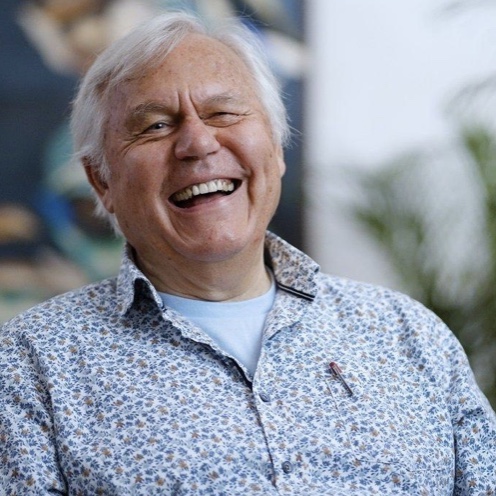
Gunther Schmidt (*1943) is a significant German psychotherapist, social scientist, and pioneer of systemic therapy and counseling. With his innovative combination of systemic therapy, hypnotherapy, and solution-oriented approaches, he has significantly shaped modern psychotherapy and the coaching landscape. His hypnosystemic approach combines depth psychological insights with a systemic perspective and places particular emphasis on resources.
Childhood and Youth
Little is publicly known about Gunther Schmidt's early years and family background. Born in 1943, he grew up in Germany and early on developed an interest in social sciences, psychology, and philosophy, which would later shape his scientific and therapeutic work.
Education and Academic Career
Gunther Schmidt studied economics first and then medicine at the University of Heidelberg in the 1960s. He continued his academic career primarily at the University of Heidelberg, where he also worked as a professor and trainer from the 1970s. There, he was significantly involved in the development of systemic training programs and engaged in research and teaching until the 1990s.
In parallel, he completed various family therapy and systemic training programs, including training in hypnotherapy according to Milton Erickson in the USA (1979), psychodrama, further education in transactional analysis, gestalt therapy, and various body therapies.
The combination and integration of these methods were particularly significant for him in order to represent the diverse facets of human communication and change.
He worked for many years as a professor and trainer, among others at the University of Heidelberg. There, he was part of the Heidelberg School, which significantly contributed to the development of systemic therapy in Germany with the established Heidelberg Family Therapy.
Career and Development of Hypnosystemic Therapy
Gunther Schmidt is one of the pioneers who connected systemic therapy with hypnotherapy, thus founding the so-called hypnosystemic approach or hypnosystemics. This approach assumes that people self-organize within social systems -- family, work, society -- and are shaped by communication and relationship patterns. Change occurs through activating resources and consciously controlling states of consciousness, especially through trance and hypnosis.
Schmidt recognized early on that conventional forms of therapy often focus too much on problems, while he advocated a resource-oriented, solution-focused attitude. His work is characterized by the connection of:
- System theory (e.g., according to Bateson and Watzlawick)
- Hypnotherapy (influenced by Milton Erickson)
- Communication theory
- Resource activation
etc.
His methods include among others:
- Hypnosystemic therapy: combination of systemic perspective and hypnotic methods
- Systemic structure constellations: extension of classical family constellations with systemic and hypnotherapeutic principles
- Solution-oriented short-term therapy: focus on rapid activation of change potentials
He is a co-founder of the German Society for Systemic Therapy, Counseling, and Family Therapy (DGSF), which significantly contributes to the professionalization and dissemination of systemic work in Germany, as well as the IGST (International Society for Systemic Therapy), together with Helm Stierlin, Fritz B. Simon, Gunthard Weber, and others.
In 2004, he was also one of the founding members of the German Federal Association Coaching (DBVC) and is responsible for the coaching curricula certified by the DBVC for hypnosystemic therapy.
Work and Research Focus
The idea of combining systemic and hypnotherapeutic concepts into a comprehensive concept in the sense of a systemically competence-oriented holistic psychotherapy is the focus of Gunther Schmidt's work. He sees his work not only as therapy but as a contribution to psychosomatic health development -- in terms of resource activation, self-efficacy, and sustainable change. In the medical and psychosocial field, the therapy of psychosis, obsessive-compulsive disorder, depression, and severe psychosomatic problems and eating disorders (bulimia, anorexia), addiction problems, phobias, couple and sexual issues form a research focus. Furthermore, a focus is on hypnosystemic organizational consulting, team development, coaching, and personal development.
Impact and Influence
Gunther Schmidt's work has gained significance far beyond the borders of Germany. His concepts and methods are applied in various fields, including:
The hypnosystemic approach according to Gunther Schmidt is now applied in many areas:
- Psychotherapy & Counseling
Especially in working with resources, trauma therapy, psychosomatic complaints, and solution-oriented approaches. - Coaching & Personal Development
To promote self-organization, decision-making ability, and inner clarity in individuals and teams. - Leadership Development & Organizational Consulting
In complex work environments to support constructive communication, role clarification, and self-leadership. - Healthcare & Psychosomatics
Especially in working with doctors, clinics, and psychosomatic illnesses -- e.g., within the framework of the Bodensee Health Center. - Training and Further Education
In numerous seminars, congresses, and at renowned training institutes, such as the Milton-Erickson-Institute Heidelberg, the Helm-Stierlin-Institute in Heidelberg, or international congresses.
The approach is also constantly being further developed -- also by colleagues from therapy, neurobiology, organizational psychology, and coaching. As recognition for his life's work in the field of therapy, coaching, and hypnosystemic work, he received the Life Achievement Award of the continuing education sector, one of the highest awards in the German continuing education landscape.
Current
Gunther Schmidt continues to offer systemic therapy and counseling and is considered one of the most well-known representatives in Germany. Even beyond his long-standing clinical leadership and teaching activities, he remains active as a supervisor, speaker, and author. Today, he works in two areas: first in the clinical field and second in the field of organizational and team development and individual coaching. As a specialist in psychosomatic medicine and psychotherapy, he is the medical director of the systelios clinic, which applies hypnosystemic trauma therapy. The institute is located at Hardberg in Wald-Michelbach in the Odenwald, and Gunther Schmidt himself designed the setup and therapy concept. In addition, he works as a coach and consultant in organizational development, as a lecturer, author, and director of the Milton-Erickson-Institute Heidelberg. The Institute for Systemic Hypnotherapy offers training for psychotherapy, coaching, and organizational development.
Quotes
“One goes as one feels. One feels as one goes.”
“The attitude is the decisive factor. I always start from an attitude of curiosity.”
“Problems are solutions that have fallen out of context.”
“Having freedom of choice and the feeling of being able to steer oneself and being able to build meaningful explanations and orientation are decisive elements of a solution pattern.”
Important publications by Gunther Schmidt on hypnotherapy and co.
1. “Love affairs between problem and solution. Hypnosystemic work in difficult contexts" (2004)
In this book, Schmidt describes how problematic behaviors arose as solutions in certain contexts and how this perspective can be utilized in therapy. He combines systemic and hypnotherapeutic approaches to open up new courses of action for clients.
2. “Introduction to hypnosystemic therapy and counseling" (2005) Carl-Auer Compact
This work offers a compact and practice-oriented introduction to the hypnosystemic approach. Schmidt explains the fundamentals, peculiarities, and application areas of this method, which combines systemic therapy with hypnotherapy. The book is aimed at therapists and counselors who want to design their work in a resource-oriented and solution-focused manner.
3. "Well Advised in Crisis" (2010)
Together with Anna Dollinger and Björn Müller-Kalthoff, this book provides insights into the counseling of executives and organizations in crisis situations. Systemic and hypnosystemic concepts are presented that help to overcome challenges and successfully implement changes.
4. "Talking Isn't Enough? Bifocal-Multisensory Intervention Strategies for Therapy and Counseling" (2016)
In this book, which Schmidt co-authored with Michael Bohne, Matthias Ohler, and Bernhard Trenkle, innovative intervention strategies are presented that go beyond verbal communication. Multisensory approaches are described that enrich therapeutic work and make it more effective.
5. "Alcohol Dependence (Treating Disorders Systemically)" (2017)
Together with Rudolf Klein, Schmidt offers a structural approach to the treatment of alcohol dependence in this book. Concepts and methods are presented that help to understand the complex interrelationships of addictive behavior and to develop effective interventions.
Sources
- Schmidt, G.: Publications on gunther-schmidt.de
- German Society for Systemic Therapy, Counseling, and Family Therapy (DGSF)
- Professional articles and interviews in systemic professional journals
- Seminar materials and lectures by Gunther Schmidt