Gregory Bateson
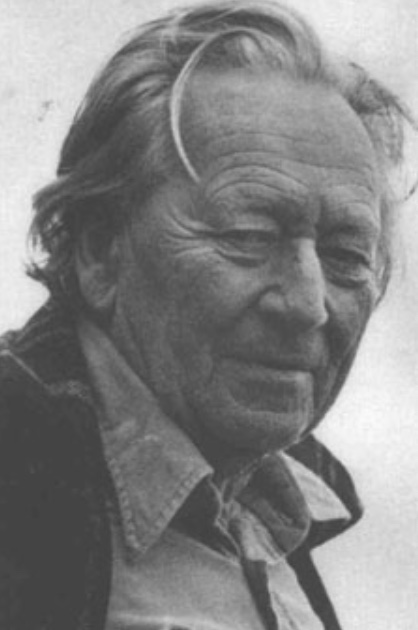
Gregory Bateson (1904--1980) was a British-American anthropologist, social scientist, linguist, cyberneticist, and philosopher, as well as a systems theorist. His thinking was characterized by a radically interdisciplinary approach, merging biology, psychology, communication theory, ecology, and philosophy. Bateson is considered one of the most significant intellectual influencers of the 20th century and was central to the development of second-order cybernetics, systemic therapy, and communication theory. His work influenced not only family therapy but also fields such as education, environmental ethics, and ultimately neuro-linguistic programming (NLP).
Childhood
Gregory Bateson was born on May 9, 1904, in Grantchester near Cambridge (England) as the son of the geneticist William Bateson. He was the youngest of three sons. The family was academically inclined but also emotionally burdened: the oldest brother died in World War I, and the middle one took his own life. These traumatic experiences shaped Gregory's worldview and his later deep engagement with communication, pattern recognition, and psychological tensions.
From an early age, Bateson showed a strong interest in biology, language, and philosophy -- themes that would later connect in his systemic perspective.
Education & Early Research
In 1922, Gregory Bateson began studying zoology or biology at the prestigious St. John's College in Cambridge, influenced by his father's scientific perspective. However, it quickly became apparent that he was primarily interested in biological phenomena in terms of patterns, relationships, and processes -- not merely from a mechanistic or reductionist viewpoint. This inclination increasingly brought him into conflict with the classical approaches of the biology of the time.
Inspired by the philosophy of Alfred North Whitehead, who taught at Cambridge, Bateson developed a deep interest in the logic of dynamic systems of all living beings and the idea that reality is determined by relationships -- not by isolated objects. Whitehead's process philosophy (e.g., from "Process and Reality") profoundly influenced Bateson's worldview.
In the late 1920s, Bateson eventually shifted to studying anthropology, hoping to find answers to the questions that concerned him: How do meaning, communication, and culture arise? At the University of Cambridge, he was influenced by the well-known anthropologist Alfred Cort Haddon, among others.
During his field research in New Guinea (1928--1929), particularly among the Iatmul tribe, Bateson documented not only cultural rituals but also developed initial ideas on "schismogenesis" -- a term he coined to describe mutually reinforcing social interactions (e.g., escalation through competition or submission). These concepts later found application in sociology, communication theory, and therapy and were published in his first book "Naven."
Notably, his collaboration with Margaret Mead in Bali (1936--1939) stands out. Together, they conducted one of the first systematic ethnographic documentation with photo and film material. This work was not only a milestone in visual anthropology but also placed cultural expressions in a communicative, non-linear context for the first time. Their joint work "Balinese Character" is considered a classic.
Bateson's early anthropological work was characterized by a growing interest in meta-patterns -- such as the question of how people structure their behavior through context perception and how social systems are governed by implicit communication rules.
Career & Contributions
After returning from the Pacific and his ethnographic work with Margaret Mead, Bateson began a radical reorientation in the 1940s: he turned to psychiatry, cybernetics, and communication theory. In this phase of his career, his focus increasingly shifted to the structure of human communication, systemic thinking, and the role of contexts.
During World War II, he also worked for the "Office of Strategic Services" (the predecessor of the CIA) and dealt with psychological warfare. During this time, he also traveled to China, Burma, Ceylon, and India.
📍 Work at the Langley Porter Neuropsychiatric Institute (1949--1962)
From 1949, Bateson was part of an interdisciplinary team at the Langley Porter Institute in San Francisco. There, he conducted innovative studies on the communication of schizophrenia patients and their families together with Donald D. Jackson, Jay Haley, and John Weakland. The result of this work was the concept of the "Double Bind" -- a paradoxical communication situation that, according to their hypothesis, can contribute to the emergence of schizophrenic symptoms. This model had a tremendous impact on systemic family therapy.
📍 Cybernetics and the Macy Conferences
Bateson was an active participant and one of the leading figures of the Macy Conferences on cybernetics (1946--1953), where he collaborated with thinkers like Norbert Wiener, Warren McCulloch, and Heinz von Foerster. There, he brought his anthropological and semiotic perspectives into the emerging discourse on feedback, control, self-organization, and information systems. He was a key figure in transferring cybernetic principles to psychological, social, and ecological systems -- a precursor to today's systems theory.
📍 Mental Research Institute (MRI), Palo Alto
In the 1960s, Bateson was instrumental in establishing the MRI in Palo Alto, a center for psychotherapeutic research. Here, he worked with personalities such as Don D. Jackson, Jay Haley, John H. Weakland, Virginia Satir, and Paul Watzlawick. His ideas from cybernetics, communication, and anthropology merged into a new paradigm: psychological symptoms were now seen as logical outcomes of dysfunctional relationship patterns, no longer just as individual disorders. This shaped the entire systemic therapy movement.
📍 Later Years: Ecology, Epistemology, and Environmental Ethics
From the late 1960s, Bateson shifted his interest again -- this time to the connections between ecology, mind, and nature. He formulated a radical critique of Western thinking, which separates subject and object, thereby creating destructive environmental relationships. In his book "Steps to an Ecology of Mind" (1972) and later in "Mind and Nature: A Necessary Unity" (1979), he described the "ecological mind" as the network of relationships, contexts, and differences that permeates all life.
He argued that thinking in patterns and contexts is more vital for survival than analytical dissection. His eco-philosophical works and systemic-cybernetic thinking influenced the ecological movement, biosemiotics, systemic pedagogy, and many postmodern scientific theories. He also explicitly spoke of a separation of mind and matter.
Additionally, inspired by Bertrand Russell, he developed the hierarchical type theory, a learning theory of his own. Bateson distinguished several levels of learning:
- Learning 0: Simple stimulus-response learning without contextual reference. A specific response rigidly follows a specific stimulus.
- Learning 1 ("Proto-Learning"): Responses are learned in connection with a context. This arises from the mutual classifications of stimuli.
- Learning 2 ("Deutero-Learning"): Here, one learns how to learn. It leads to habits and attitudes that influence personality and communication.
- Learning 3: Profound restructuring of previous learning patterns. This level is rare and can, according to Bateson, provoke a psychotic decompensation (nervous breakdown) -- or, in a positive sense, lead to a kind of enlightenment.
- Learning 4: Change of the structures of Learning 3. Bateson suspected that this only occurs in the interaction between individual development and evolution.
📍 Work with his daughter Mary Catherine Bateson
In the 1970s, he worked closely with his daughter, the anthropologist and writer Mary Catherine Bateson. Together, they gave lectures and published conversations, including in the work "Angels Fear" (posthumously 1987), which illuminates epistemological questions and spiritual dimensions of knowledge.
Bateson's Scientific Approach & Philosophy
Bateson's thinking was profoundly systemic. He recognized early on that there are no isolated events -- everything is connected through relationship, context, and communication. He was one of the first to transfer the principle of "ecological thinking" to human behavior. For him, the focus was not on the "right" answer, but on understanding patterns, interactions, and contexts. He was influenced by the major philosophical approaches of Plato, Sigmund Freud, Carl Gustav Jung, and others.
Central themes in Bateson's thinking are:
- Double-Bind: Communication patterns that contain paradoxical, disease-inducing structures -- a central concept in systemic family therapy that deals with the relationship between family communication patterns and schizophrenia. Bateson wrote insights in the work "Theory of Schizophrenia" and as a co-author in the work "Schizophrenia and Family."
- Second-order cybernetics: The observation of the observer -- Bateson recognized that every researcher is part of the system they are studying.
- "Ecology of Mind": The mind is not a thing in the head, but a relational phenomenon -- distributed across systems, communication, environment, and body.
Influence on NLP
Gregory Bateson was not a direct co-developer of NLP but had a significant influence on the thinking direction and development of the method. He was a mentor to John Grinder and an influential thinker for Richard Bandler. Bateson brought the two together with Milton Erickson -- a crucial step for the later development of NLP.
Bateson's model of "learning at different levels" and his concept of "logical levels" (later systematized by Robert Dilts) formed a central foundation for many NLP techniques. His cybernetic and communication-theoretical insights also shaped the structure of the modeling processes in NLP.
In 1974, when Bandler and Grinder were just developing the "Meta-Model," Bandler and Bateson were even neighbors, and Bateson wrote a foreword for the first "NLP book" that contained the Meta-Model, "Structure of Magic I."
Training Style & Impact
Bateson was not a typical teacher but a questioner, a seeker. He did not teach in the classical sense but challenged his students to think for themselves, ask questions, and recognize patterns. His lectures were considered complex, often poetic, and difficult to access -- but for many also transformative.
He had an almost "zen-like" approach: instead of providing solutions, he offered paradoxes. Instead of conveying content, he stimulated thought processes.
However, his works often do not receive enough attention, as they are both linguistically and thematically unconventional, complex, and transdisciplinary.
Quotes by Gregory Bateson
"The major problems in the world are the result of the difference between how nature works and the way people think."
(The greatest problems in the world arise from the difference between the way nature functions and the way people think.)
"Information is a difference that makes a difference."
(Information is a difference that makes a difference.)
"Logic is a poor model of cause and effect."
(Logic is a weak model for cause and effect.)
Personal
Gregory Bateson was married to the renowned anthropologist Margaret Mead, with whom he had a daughter: Mary Catherine Bateson -- herself an influential thinker. They later divorced. He was a quiet, rather reserved person who preferred to observe rather than be in the spotlight.
He died on July 4, 1980, in San Francisco.
Influence & Legacy
Bateson's work has not only shaped psychotherapy and education but also the environmental movement, communication theory, organizational development, and systems thinking. He was the first to introduce systems theoretical and cybernetic approaches into the social and human sciences, from which systemic theory emerged. Many of his ideas were only fully recognized and further developed after his death. His influence remains alive today, especially in systemic therapy, ecopsychology, and NLP.
He remains one of the most original thinkers of the 20th century -- someone who built bridges between disciplines and thought in patterns where others saw only facts.
Important publications
- Naven: A Survey of the Problems Suggested by a Composite Picture of the Culture of a New Guinea Tribe Drawn from Three Points of View; Stanford University Press (1936) -- Analysis of ritual patterns among the Iatmul
- Communication (Communication. The Social Matrix of Psychiatry) (1951) together with Jürgen Ruesch - Analysis of human communication as multilayered social behavior.
- Steps to an Ecology of Mind (1972) -- German: Ökologie des Geistes. Anthropological, psychological, biological, and epistemological perspectives (Suhrkamp Verlag) - Essays on cybernetics and communication
- Mind and Nature (1979) -- Attempts to formulate a unified theory of living systems
- Angels Fear (posthumously, with daughter Mary Catherine Bateson) -- On patterns and forms of holiness and knowledge
Sources
- Publications by Gregory Bateson such as the book Steps to an Ecology of Mind; Mind and Nature: A Necessary Unity; Angels Fear: Towards an Epistemology of the Sacred (with Mary Catherine Bateson)
- Mary Catherine Bateson (1984). With a Daughter's Eye: A Memoir of Margaret Mead and Gregory Bateson.
- Lipset, David (1980). Gregory Bateson: The Legacy of a Scientist.
- Haley, Jay (1976). Uncommon Therapy: The Psychiatric Techniques of Milton H. Erickson, M.D.
- Cybernetics Society / International Bateson Institute (Websites and archival sources)
- Mary Catherine Bateson: Our Own Metaphor. A personal account of a conference on the effects of conscious purpose on human adaptation.