Fritz Perls - Inspiration for NLP
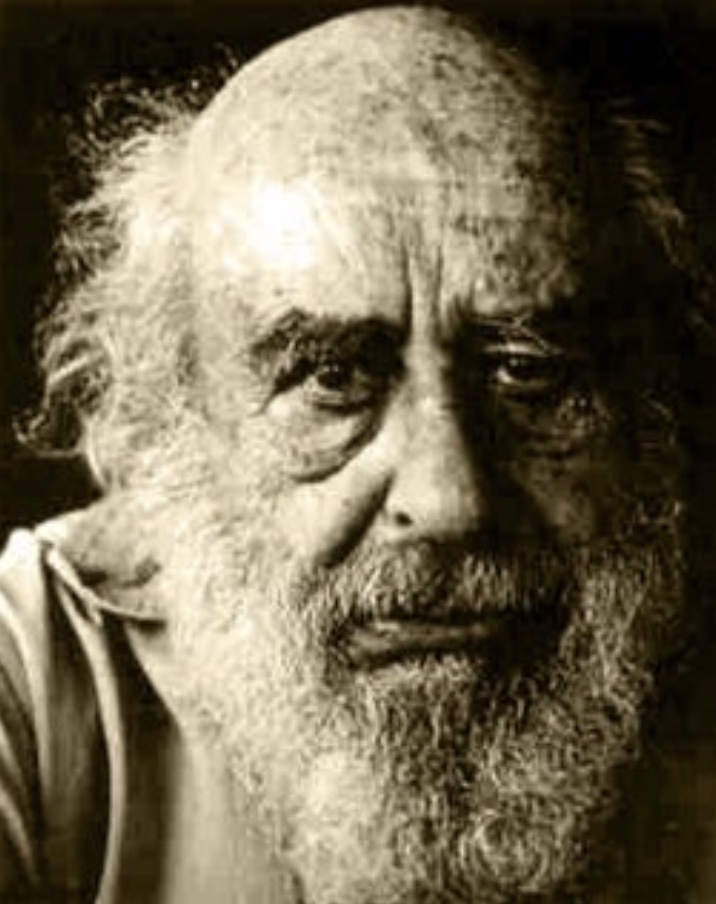
Friedrich Salomon Perls (Fritz Perls) is considered one of the most influential psychotherapists of the 20th century and is primarily known as the co-founder of Gestalt therapy together with his wife Laura Perls and Paul Goodman -- a holistic method that emphasizes the here and now, body awareness, and personal responsibility. With his provocative style, his departure from classical depth psychological methods, and his work in the context of Humanistic Psychology, he profoundly shaped modern therapeutic understanding and became one of the three great forefathers of NLP. His work is inseparably linked to the cultural movement of the 1960s and 70s, particularly through his involvement at the Esalen Institute in California.
Childhood & Youth
Fritz Perls was born on July 8, 1893, in Berlin -- the third child of a Jewish family with a middle-class background. His father Nathan Perls was a merchant and involved with the Freemasons. He was considered rather distant and was little present in his upbringing. It is reported that he frequently cheated on his wife, which led to a permanently strained relationship between him and Fritz. The mother, Amalie Laiser, was strongly religious, dominant, and overprotective -- a combination that Perls later found emotionally constraining. These contradictory relational experiences in his family of origin -- an absent, unfaithful father and a controlling mother -- shaped his skepticism towards authorities and influenced his therapeutic understanding of autonomy, boundaries, and authenticity.
In school, Fritz Perls was considered rebellious and nonconformist. He was intelligent but often in conflict with teachers and authority figures. He developed a strong interest in art, theater, and philosophy early on. In the Berlin artist and intellectual circles of the 1910s, he found a spiritual home that provided a counterbalance to his family situation. He felt particularly drawn to German Expressionism, whose aesthetic and emotional breaking of conventions shaped his attitude towards psychology.
Education
Perls began studying medicine in 1914 after graduating from high school, which was interrupted by World War I. During his time as a medic at the front, he experienced traumatic war experiences that deeply influenced his later attitude towards the human psyche. After the war, he completed his medical studies and began further training in neuropsychiatry. He was particularly influenced during this time by encounters with psychiatrist Kurt Goldstein, who advocated a holistic approach, as well as with Karen Horney and Wilhelm Reich.
In the 1920s, he completed a classical psychoanalytic training in Frankfurt and later in Vienna, where he mingled with Sigmund Freud's circle but increasingly distanced himself from orthodox psychoanalysis. The break with Freudian doctrine occurred gradually, as Perls believed that its focus on early childhood sexuality and past-oriented analysis did not do justice to human potential.
Back in Berlin, Perls trained as a psychoanalyst and worked at the Berlin Institute for Psychoanalysis. Here he met Lore (later Laura) Posner, a psychologist with a philosophical background. The two married in 1930. During this time, Perls developed a growing interest in Humanistic Psychology as well as in phenomenology and Gestalt theory, particularly through his encounter with Gestalt psychologist Max Wertheimer. The work of Kurt Goldstein on organism and self-regulation would later become central to his own understanding of therapy.
Development of Gestalt Therapy in Exile
With the rise of the National Socialists in 1933, it became increasingly dangerous for Jewish intellectuals and psychoanalysts in Germany. Fritz and Laura Perls fled to Amsterdam in 1933 and then to South Africa in 1934. In Johannesburg, they opened a psychoanalytic practice and began developing initial approaches to their own therapeutic model. In South Africa, Perls also worked for the South African army -- initially as a military psychiatrist during World War II. This work brought him into contact with war trauma victims and the practice of group therapy.
During these years, Perls was already writing his first book, which later appeared under the title Ego, Hunger and Aggression (1942). In this work, a clear departure from classical psychoanalysis was already indicated -- in favor of a more independent, experiential, and holistic approach to humanity.
In 1946, Fritz and Laura Perls emigrated to the USA with their two children, where they initially lived in New York. There, Fritz and Laura gathered a group of Gestalt-theoretically oriented individuals around them, forming a regular discussion circle: Paul Goodman, Isadore From, Paul and Lotti Weisz, Elliot Shapiro, Sylvester Eastman, and Ralph Hefferline. In these discussions, a significant departure from psychoanalysis emerged, leading to the birth of a new form of psychotherapy: Gestalt therapy. It is a specific experiential activating psychotherapy method that focuses on enhancing awareness of all present feelings, sensations, and behaviors, and the contact with oneself and the environment. From this collaboration, the foundational work Gestalt Therapy: Excitement and Growth in the Human Personality (1951) emerged, marking the beginning of Gestalt therapy as its own therapeutic school.
Gestalt therapy understands humans as holistic beings in continuous exchange with their environment. It emphasizes present experience, personal responsibility, and the integration of split-off personality parts (“unfinished business”). Typical of Perls was the direct confrontation of the client with themselves and their behavioral patterns -- often through dramatic methods like the “empty chair”.
In 1952, a Gestalt Institute was founded in New York, and another in 1953/54 in Cleveland. Later, Perls moved to Miami (Florida) and then to the West Coast of California due to disagreements within the Gestalt group.
Career Path and Influence
While Laura Perls remained in New York and continued to focus on a deeper, theoretically reflected elaboration of Gestalt therapy, Fritz Perls settled at the Esalen Institute in Big Sur -- a spiritual-psychological center of the Human Potential movement. Esalen was a meeting point for pioneers of Humanistic Psychology, philosophy, bodywork, and consciousness research. Here, Fritz Perls further developed his well-known, very direct, sometimes confrontational live therapy style.
In group sessions (“Hot Seat” work), he provoked emotional breakthroughs in participants and worked with individuals in front of an audience. His focus on the “here and now,” personal responsibility, and experiential work became particularly visible. He was not a theorist in the classical sense, but someone who could initiate profound processes through presence, intuition, and provocation.
Through the popularity of the Esalen Institute, his charismatic presence, and his spontaneous, often unorthodox working style, Fritz Perls became a cult figure of the counterculture and the humanistic movement. Through workshops, demonstrations, and lectures, he gained international recognition.
Influence on NLP
By the late 1960s and early 1970s, Fritz Perls increasingly came into the focus of a new generation of psychology students and therapists interested in effective, modelable change methods. Among them were Frank Pucelik, Richard Bandler, and John Grinder, who together founded NLP.
Fritz Perls and Richard Bandler never met personally, as Perls passed away in 1970 -- when Bandler was still very young. However, Bandler intensively engaged with audio recordings and transcripts of Fritz Perls' therapy sessions. In the early 1970s, he was commissioned by Robert Spitzer, the then-editor of Science and Behavior Books, to transcribe audio material from Perls. In doing so, Bandler developed a deep interest in the language, interventions, and structure of Perls' therapeutic communication.
Together with John Grinder, Bandler began to systematically analyze and model these communication patterns. From these analyses, a central pillar of NLP developed: the idea that one can model “genius” therapists by analyzing their language patterns and intervention techniques and make their “strategies” accessible to others.
Perls' influence on NLP can therefore be summarized as follows:
- The focus on the here-and-now and the client's personal responsibility,
- the importance of conscious verbal expression,
- the use of physical presence and contact,
- the use of provocative, direct interventions,
- and above all, the way Perls worked with nonverbal signals strongly influenced NLP.
Bandler and Grinder saw Perls -- alongside Milton Erickson and Virginia Satir -- as one of the three “therapy grandmasters” whose skills formed the foundation of NLP modeling.
Training Style and Philosophy
Fritz Perls was known for his direct, sometimes brusque manner. He believed that healing was possible through awareness, taking responsibility, and experiencing in the here and now. His sessions were often intense “experiential learning,” where clients had to step into roles or confront themselves. His philosophy was strongly influenced by existentialism, Gestalt psychology, and Zen Buddhism.
A central element was his rejection of pathologizing diagnoses. Instead of analyzing illness, Perls wanted to promote growth potential and empower people to mature into complete, self-determined personalities.
Quotes by Fritz Perls
Here are some central quotes by Fritz Perls:
“I do what I do. You do what you do. I am not on this earth to live up to your expectations -- and you are not here to live up to mine.”
“Maturity is the ability to live without being controlled by others.”
“Lose your mind and come to your senses.”
Personal
Fritz Perls was married to Laura Perls from 1930 until the 1950s. The marriage produced two children. The couple later separated both professionally and privately but remained on friendly terms. After the separation, Perls led a nomadic life, traveling extensively and holding seminars worldwide. He died on March 14, 1970, in Chicago during a lecture tour due to a heart complication.
Influence and Legacy
Fritz Perls is one of the key figures of Humanistic Psychology, alongside Carl Rogers, Virginia Satir, and Abraham Maslow. Gestalt therapy developed into an internationally widespread method that is used not only in psychotherapy but also in education, organizational development, and coaching. Perls' work also had a significant influence on NLP (Neuro-Linguistic Programming) -- for example, in the emphasis on perception, language, and direct contact.
He inspired a whole generation of therapists to greater authenticity, presence, and courage for direct encounters. His practice was less about technique and more about attitude -- radical, vibrant, honest.
Important Publications by Fritz Perls
- “Ego, Hunger and Aggression” (1942/1947) -- Early criticism of Freud, initial Gestalt approaches
- “Gestalt Therapy” (1951, with Hefferline & Goodman) -- Foundational work of Gestalt therapy
- “Gestalt Therapy Verbatim” (1969) -- Live therapy sessions and lectures
- “In and Out the Garbage Pail” (1969) -- Autobiography with personal insights
Sources
- Works by Fritz Perls: (1947). Ego, Hunger and Aggression; Hefferline, R., & Goodman, P. (1951). Gestalt Therapy; (1969). Gestalt Therapy Verbatim; (1969). In and Out the Garbage Pail.
- Bowman, C. E. (2005). Gestalt Therapy: A Guide to Contemporary Practice.
- Spagnuolo Lobb, M. (2013). Gestalt Therapy Around the World.