Frank Pucelik - The Secret Third Man in the History of NLP
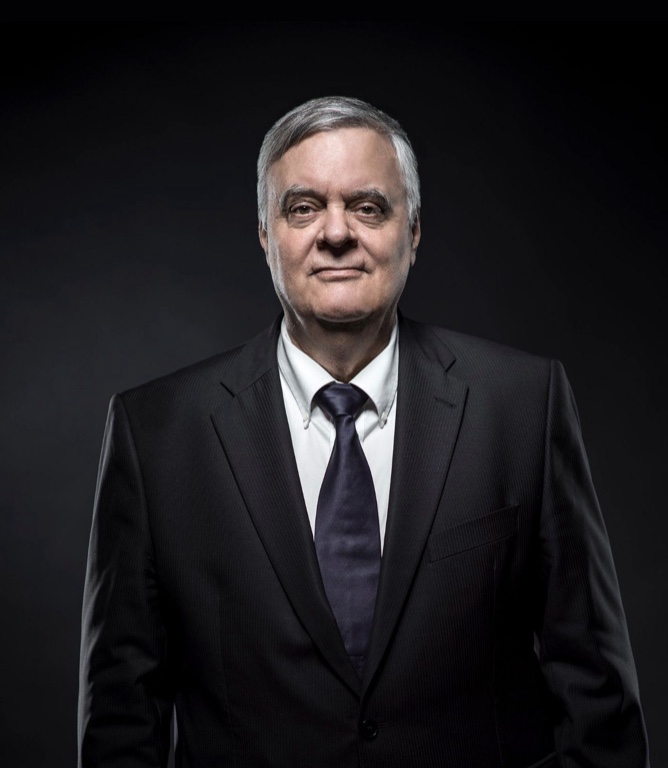
Frank Pucelik is considered one of the three original developers of Neuro-Linguistic Programming (NLP), alongside Richard Bandler and John Grinder. Although his name was less prominent in the early history of NLP compared to Bandler and Grinder, both historical records and statements from Bandler and Grinder attest to his significant role in the early days. Pucelik contributed primarily his experiences from Gestalt therapy, group work, and his work with Vietnam veterans.
Early Years & Vietnam War
Frank Pucelik was born on March 25, 1945, in Lincoln, Nebraska, USA. Not much is known about his childhood and youth in San Diego County, but some key experiences from his early life clearly shaped his later professional direction.
According to his own account, he grew up in rather difficult circumstances and developed a strong interest in human behavior, group dynamics, and processes of change at an early age. His childhood was marked by upheavals and emotionally challenging experiences. He describes himself retrospectively as an "angry young man" with little perspective and a strong need to protest against authorities.
After graduating from high school, he attended college but dropped out early. In the interview volume META NoLP (2017), Pucelik explains that he struggled with the academic structure. At that time, he was more interested in social movements, music, and personal freedom than in lectures or exams. He says:
"I was a pretty angry and aimless young man. I went to college, but it didn't go particularly well -- I was more busy rebelling. I got kicked out and volunteered for Vietnam."
(META NoLP, Ch. "Early Life")
After Frank Pucelik dropped out of college, he served as a volunteer soldier in the US Navy. As part of his service, he was stationed in Japan, where his medical training as a corpsman took place. He then served as a rifleman and medic in the Vietnam War in 1966, a time he described as extremely traumatic and later referred to as "13 months in hell." His experiences there would profoundly influence the rest of his life. The psychological burdens and traumas that many war veterans faced deeply moved him -- and sparked his interest in psychotherapy and psychological healing processes, especially in dealing with Post-Traumatic Stress.
In 1968, he married Judith Ann DeLozier (the marriage lasted until mid-1973) and became a father to a son in 1970.
Education in Psychology & Development of NLP
Frank Pucelik studied psychology as a major and political science as a minor at the University of California, Santa Cruz (UCSC) starting in 1971. In the 1970s, UCSC was considered a progressive center for the humanities and alternative education. It provided an environment where creative research approaches and interdisciplinary collaboration were explicitly encouraged -- an ideal ground for the early development of NLP.
Pucelik showed particular interest in humanistic psychology, Gestalt therapy, group dynamics, and the question of how change can be effectively and sustainably designed. During his studies, he began to lead therapy groups, particularly in the context of addiction support and post-Vietnam trauma work. In this context, he developed early models for structured communication and patterns in change processes.
Between 1971 and 1978, he was involved in the so-called META Research Project at the University of Santa Cruz in California -- an interdisciplinary project that focused on how outstanding human performances can be analyzed and taught so that others can achieve their potentials. There, he met Richard Bandler (born 1950), a mathematician, philosopher, and computer scientist, who, together with Pucelik, analyzed therapeutic sessions and conducted early modeling processes, thus laying the foundations of NLP.
Pucelik brought his practical experience with group therapy, psychology, Gestalt therapeutic approaches, and communication into this collaboration. He was the one who managed group dynamics and had a clear understanding of interpersonal processes. John Grinder (born 1939), then a professor at UCSC, was later brought in as an expert in linguistics to observe and systematically analyze and model the linguistic structures.
His contribution can be summarized as follows:
- He was a co-initiator of the modeling model: Pucelik understood early on that one can learn targetedly through careful observation and imitation of successful communication.
- He brought in the Gestalt therapy perspective, especially regarding body language, congruence, and presence.
- He led many of the original practice groups where the early NLP techniques were developed and tested.
- He played a mediating role between Bandler's intuitive style and Grinder's systematic language.
- He ensured a practical, experience-oriented structure of early NLP, for example, through role plays, live demonstrations, and direct feedback in the group.
Thus, Pucelik was not just an observer but a practical co-developer in the experimental formats from which later emerged the "Structure of Magic" and the Meta-Model of language. Numerous reports from eyewitnesses -- including Robert Dilts and Judith DeLozier -- confirm his central role.
His academic career culminated in 1976 with a bachelor's degree in psychology, followed by further studies in education and psychology until 1977. Despite his young age, Pucelik was already a recognized figure in the local therapeutic scene and an experienced moderator of experimental self-experience groups.
Separation and Later Development
In 1974, Pucelik's position in the trio changed. Grinder and Bandler spent more and more time together, and Pucelik became an organizer, intermediary, and confidant. The turning point came two years later.
In 1976, the paths of Pucelik and the Bandler/Grinder duo diverged. The reasons are not clearly documented, but personal differences and different working styles likely played a role. According to Pucelik, Bandler asked him to leave the team, which marked a low point for Pucelik. He then withdrew from the emerging commercial NLP field but continued to pursue his own path, particularly in the area of youth assistance and social education.
He initially turned to other areas of change work. In the 1980s, he became involved in addiction therapy and developed programs for addiction rehabilitation and social work -- often using NLP-inspired methods but under different names.
He founded several companies in the field of communication and training and developed his own methods of personnel development. In the 1990s, he increasingly shifted his focus to Eastern Europe, particularly Ukraine and Russia, where he worked in areas such as business training, conflict resolution, and systemic work.
Work in Ukraine and Russia
In the early 1990s, Frank Pucelik increasingly shifted his sphere of influence to Eastern Europe -- particularly Ukraine and Russia. During this post-Soviet transformation phase, there was a great need for leadership, communication, and the building of civil society. Pucelik recognized this opportunity and contributed his knowledge in the form of training programs and institutional consulting.
He founded several educational initiatives, including the "Humanitarian Leadership Program," which trained young leaders in social, economic, and political organizations. The programs combined principles of NLP, systemic work, solution-oriented communication, and organizational psychology.
His activities included, among others:
- Training for NGOs dealing with youth, education, health, and human rights
- Establishing train-the-trainer programs for leaders in the public and private sectors
- Conflict prevention and mediation in politically sensitive contexts
- Contributions to the development of modern personnel and management structures in companies, authorities, and educational organizations
His influence was so profound that many Russian and Ukrainian professionals today consider him a key figure in the dissemination of Western communication and leadership concepts in the region. He was also active at times in Azerbaijan, Georgia, Kazakhstan, and Poland.
Training Style and Philosophy
Frank Pucelik's training style and personality are characterized by a direct, human, and practical approach. He prefers experience-based learning that focuses less on theoretical instruction and more on concrete application. His seminars are interactive, challenging, and lively. Participants are encouraged to surpass themselves and activate their own resources.
At the center of his work is the quality of interpersonal relationships. Pucelik repeatedly emphasizes that genuine change is only possible in an atmosphere of trust, respect, and authenticity. He combines a clear view of group dynamic processes with a deep understanding of individual developmental paths.
He rejects dogmatic or esoteric expressions of NLP and criticizes forms where show and technique are more important than genuine transformation. His focus is on ethical application, clarity in communication, and the integrity of the trainer's attitude. He understands NLP as a practical tool for expanding choices -- not a miracle cure, but a learnable model for promoting human development.
Typical of Pucelik is his down-to-earth manner: humorous, direct, with great respect for the uniqueness of each participant. He does not see himself as a "guru" but as a process facilitator -- someone who opens spaces where learning and change can happen naturally.
Influence and Legacy
Although Pucelik's role in the history of NLP remained under the radar for a long time, he is increasingly being recognized today -- not only as a co-founder but as a deeply human voice within the movement. His focus on social justice, education, and personal integrity sets him apart from many commercialized NLP currents.
His legacy includes:
- the early structural co-development of NLP in the pre-1975 phase
- the introduction of Gestalt principles and group dynamics into NLP
- the dissemination of NLP concepts in Eastern Europe -- in a social and cultural context
- an ethically grounded perspective on communication and change
Many trainers in Eastern Europe and Asia see him as a central source of inspiration. His contribution to practical training and his critical stance towards superficialities in NLP have shaped generations of coaches and leaders.
Pucelik stands for an NLP that aims to be serving, human, and effective in the long term -- and is thus a significant counterpoint to the technology-oriented and marketing-driven interpretation that NLP has taken on in some parts of the world.
Current
Frank Pucelik is still active today -- both as a consultant, trainer, and keynote speaker. His main office is the Pucelik Consulting Group with branches in Odessa, Kyiv, and Moscow (until the Ukraine war), from where he offers international training, coaching programs, and consulting.
He is particularly active in the areas of:
- Organizational development and change management
- Leadership training
- Communication in conflict zones
- Coaching programs for young talents
Since the war in Ukraine, his work has increasingly focused on peace dialogues, resilience training, and psychological support for NGOs and educational initiatives in affected regions.
In addition, he regularly participates in international NLP congresses, gives masterclasses on systemic change, and publishes articles on ethical development, intercultural leadership, and communication skills.
He is also active as a mentor for younger trainers and is involved in quality assurance of NLP training. His special concern is to teach NLP not as a collection of techniques, but as an attitude -- shaped by ethics, empathy, and critical thinking.
Quotes
"Every person is a walking miracle." -- Expression of his appreciation for human potential
"The war taught me a lot. War taught me a bullet gets you if it gets you... You can be green, you can be purple, a colonel or a major or a corporal. You're nobody special." -- Reflection of his war experience in Vietnam
"Equality starts with each person... Without any judgement, arrogance, or disrespect." -- Attitude towards respectful communication in training
Important works by Frank Pucelik
- The Origins of NLP (with John Grinder & Richard Bandler, interview contributions)
- Reality Wars -- When Leadership gets Dirty (2011, about leadership and manipulation)
- Inside the Box: A Practical Guide to Creativity and Innovation in Teams
Sources
- Pucelik, Frank (2012): Meta NoLP. The Secret History of NLP. Meta International
- Grinder, John & Bostic St. Clair, Carmen (2001): Whispering in the Wind. J & C Enterprises
- Dilts, Robert (2011): The Origins of Neuro-Linguistic Programming. Crown House Publishing
- Interviews with Frank Pucelik on YouTube: e.g. Frank Pucelik about the early history of NLP (NLP Leadership Summit / NLP Russia) https://www.youtube.com (Accessed last: June 2025)