Bert Hellinger - Developer of Family Constellation
Pioneer of systemic therapy and family constellations
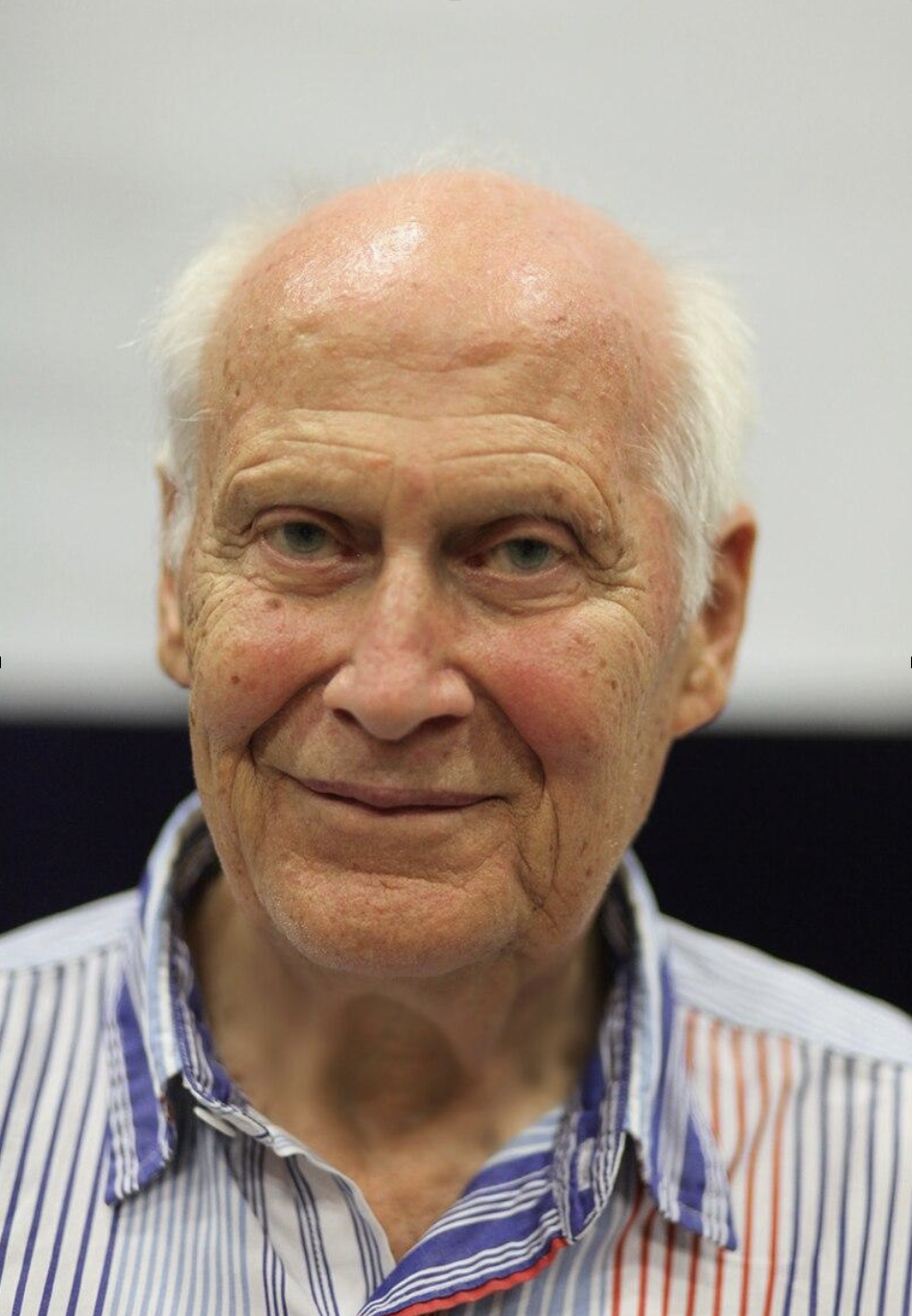
Bert Hellinger (born Anton Hellinger, December 16, 1925 – †September 19, 2019) was a German psychotherapist, theologian, and author. He became internationally known as the founder of the Family Constellations (also known as Systemic Constellation), a method of systemic therapy. His work significantly shaped the psychotherapeutic landscape and simultaneously sparked considerable controversy – both due to his therapeutic practice and his later spiritual views.
Early Years and Influences
Bert Hellinger was born on December 16, 1925, in Leimen (Baden) under the name Anton Hellinger. He grew up in Cologne in a strictly Catholic family. His father was a railway worker, strictly religious, and authoritarian in his parenting style, which strained the relationship between father and son. The political situation in Nazi Germany left its mark: As a member of a banned Catholic youth movement, he was under the watch of the Gestapo.
After World War II, he joined the Order of the Mariannhiller Missionaries, studied philosophy and Catholic theology, and was ordained as a Catholic priest. As a member of the order, Hellinger took the name Suitbert, shortened to "Bert". In South Africa, Hellinger worked with Zulu communities for 16 years. This time deeply influenced him: The Zulu culture, their approach to conflict, spirituality, and healing left lasting impressions that would later be reflected in his therapeutic work.
Training as a Therapist
After returning to Europe in the 1960s, he left the order and renounced the priesthood. He completed a psychoanalytic training in Vienna and began to engage intensively with various forms of psychotherapy:
- Gestalt Therapy (according to Fritz Perls)
- Primary Therapy (according to Arthur Janov)
- Transactional Analysis (according to Eric Berne)
- Hypnotherapy (according to Milton Erickson)
- Systemic Family Therapy (according to Virginia Satir)
From the synthesis of these influences, especially the family reconstruction of Virginia Satir, he developed his own method: the Family Constellation.
The Development of Family Constellation
In the 1980s/1990s, Hellinger began what would later be referred to as classic family constellation. In this process, "Representatives" of family members are symbolically arranged in the space to make unconscious entanglements within a family system visible. Hellinger observed that people often took on the fates of earlier generations – such as guilt, loss, or trauma – to secure their belonging. He called this Systemic Entanglement.
How does a Family Constellation work?
In Hellinger's family constellation, the person setting up the constellation spatially arranges any individuals from the group of attendees to represent family members in a way that corresponds to their perception of the family situation. The change in the client's perspective on the problems is then supposed to occur through intellectual and emotional insights from a "knowing field".
Hellinger later developed the so-called "Movements of the Soul and Spirit", in which the representatives silently surrender to their movement impulses from the role and the systemic field. This usually leads to dramatic, mostly resolving movement patterns.
International Impact & Developments
Bert Hellinger became known worldwide. His method was adopted in many countries, particularly in Germany, Austria, Switzerland, Russia, Latin America, and Asia, and has significantly influenced systemic therapy and family therapy. Numerous schools and therapists further developed his work:
- Organizational Constellations (System Analysis in Companies)
- Structural Constellations (according to Matthias Varga von Kibéd and Insa Sparrer)
- Symptom Constellations (psychosomatic complaints)
- Trauma Constellations (in combination with trauma therapy)
Building on his legacy, the German Society for Systemic Therapy (dgsf) was also founded, which aims to establish standards for training, quality assurance, and ethics in the field of systemic constellations.
Controversy & Criticism
In professional circles, Hellinger was controversial. Critics accused him of, among other things:
- an authoritarian demeanor in seminars and demonstrations
- a lack of scientific foundation for his method
- a simplified representation of complex psychological processes
- cross-border violations in constellation processes
- esoteric-spiritual worldviews that were perceived as dogmatic
Despite the criticism, his work remained a valuable source of inspiration for many – especially in the context of personal and transgenerational healing processes.
Quotes by Bert Hellinger
"Love only succeeds in order."
"What is acknowledged can go. What is repressed remains."
"Everything that acts is greater than we are."
"We are more shaped by what we have taken on than by what we have experienced ourselves."
Important publications
- "Orders of Love" (1994) – foundational work on his concepts
- "Center and Periphery" – continuation of Hellinger's method
- "Return to Love" – on attachment, partnership, resolution
- "The source does not need to ask where it flows" – spiritual deepening
- "Recognizing what acts" – interviews about his life's work
Personal life and death
Bert Hellinger was married twice. He met his first wife after leaving the order, with whom he had three children. In the 1990s, he married Sophie Hellinger in a second marriage. Together they founded the international Institute Hellinger𝐼leben®.
In the later years of his life, he withdrew from public constellation work but continued to write and serve as a spiritual teacher. He died on September 19, 2019 at the age of 93 in Bad Reichenhall.
Bert Hellinger's legacy lives on in systemic therapy and family constellations and continues to inspire therapists and coaches worldwide.