Parts Party in Neurolinguistic Programming (NLP)
Term and Definition
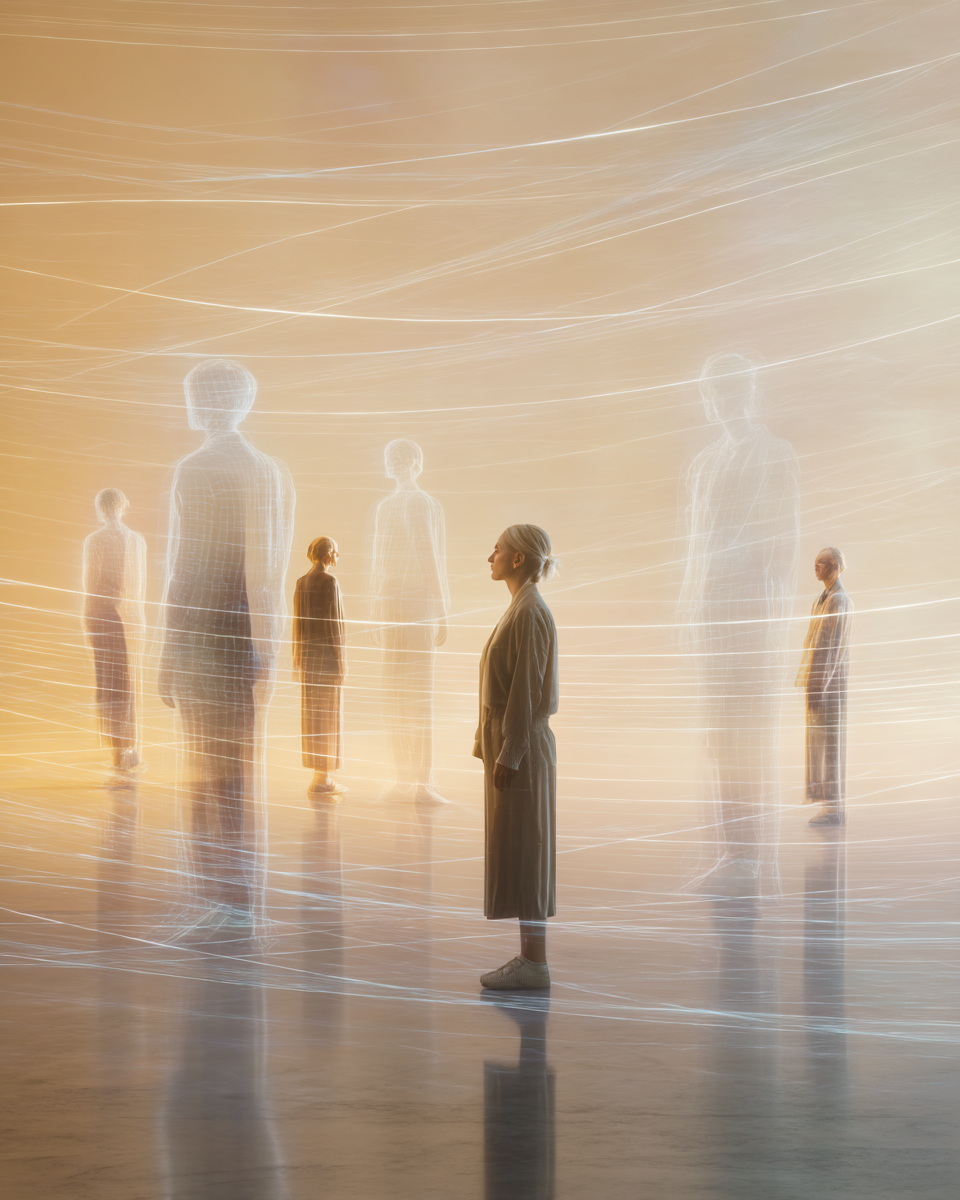
The Parts Party describes a profound process of inner parts work, in which various aspects of personality are made visible, audible, and brought into contact with each other. The term goes back to the systemic family therapist Virginia Satir, who made inner personality parts experienceable in the form of a group dynamic staging. Later, this concept was taken up in NLP, further developed, and integrated into different formats. While Satir's original Parts Party was conducted with real people in the room, each representing an inner part, the NLP version primarily uses inner representations and mental communication structures. Both variants are based on the fundamental assumption that people consist of several inner voices, needs, and motivational systems that do not always work harmoniously together in everyday life.
The goal of the Parts Party is to improve communication between these inner parts, resolve inner conflicts, make resources visible, and promote a more holistic self-understanding. Through the staging or mental representation of the parts, it becomes clear which needs they represent, what positive intentions they pursue, and how they can cooperate with each other. The process creates clarity, emotional balance, and enables profound changes at the identity and values level.
Origins and Theoretical Background
The Parts Party has its roots in humanistic and systemic psychotherapy. Virginia Satir viewed humans as a complex system of inner and outer relationships. She recognized that many interpersonal problems are co-caused by inner conflicts. Her Parts Party was meant to give form and expression to these inner voices to make change visible and experienceable. The method is based on the idea that each part of the personality fulfills a function and pursues a positive intention – even when its behavior seems problematic in everyday life.
Satir's group dynamic approach
In Satir's original approach, the Parts Party was conducted with a real group. The client named various inner voices or personality parts, such as the critic, the wounded inner child, the protector, or the adventurer. Each of these roles was assigned to a group member who embodied the corresponding part. This physical and vocal representation created a lively space where the client could observe her inner conflicts from the outside. Satir used this process to promote emotional clarity, coherence, and self-acceptance. Her method was creative, physical, intuitive, and deeply human.
NLP adaptation by Bandler and Grinder
Richard Bandler and John Grinder adopted the basic idea of inner parts work into NLP and integrated it into their own formats. NLP modeling focused on understanding the structure of communication between inner parts. Since NLP traditionally works with inner representations, the Parts Party was further developed into an internally guided process. This approach is closely related to techniques such as Parts Integration, Six-Step Reframing, or Timeline work. The NLP variants focus more on mental images, inner dialogues, and the cognitive-emotional patterns that create inner conflicts.
While Satir's approach is characterized by group energy, real interaction, and physical movement, the NLP version is distinguished by a structured approach, mental flexibility, and the use of sensory representations. Nevertheless, both share the same core: the belief that inner parts are not enemies but expressions of a positive intention. Integration occurs when their different needs are acknowledged and brought into harmony with each other.
Application Examples
The Parts Party offers a variety of applications, as inner parts operate in almost all areas of life. People experience inner conflicts, contradictory needs, or the desire for clarity between different roles. The method creates a stage where these dynamics can become visible and find a new order.
Making inner conflicts visible
A typical area of application is to clarify an inner tornness. A client wants to advance professionally, but another part desires security and calm. A third part longs for creative freedom. By representing these inner voices – either through real people or through inner images – it becomes clear what needs, values, and fears lie behind them. The client realizes that these parts are not directed against each other but represent different facets of her self that can together find a new solution.
Strengthening inner resources
The Parts Party is also suitable for making visible resources that are overlooked in everyday life. People often possess more strength, courage, or creative abilities than they are aware of. By making these qualities visible as inner voices or figures, they can be specifically promoted and integrated into decision-making processes. A client who experiences herself as insecure may discover a part that acts courageously and decisively. This part can become a mentor or guide when it is heard.
Systemic clarification and identity development
A Parts Party can initiate profound identity processes, as inner voices often represent different roles that have changed over the course of life. A part that once provided protection may have become too rigid or overly cautious later on. The Parts Party makes this development recognizable, and the person can reassess the current relevance of each part. This leads to a more mature, flexible self-image.
Areas of Application
The areas of application for the Parts Party are diverse. They range from therapeutic contexts to coaching processes to creative group work. In therapy, it supports the clarification of deep emotional patterns. In coaching, it serves goal clarification, decision-making, and personal development. In teams, it can be used to make roles, expectations, and values visible. It also plays an important role in educational contexts, conflict resolution, or self-experience.
Especially because the Parts Party can incorporate both intrapsychic processes and group dynamic aspects, it is considered particularly variable. It is suitable for people who want to work physically as well as for those who prefer to work with inner images and mental processes.
Methods and Exercises
The Parts Party can be conducted in different variants. However, its basic structure remains similar regardless of the context: inner parts are identified, given space, their needs are heard, and then a new form of cooperation is developed.
The Parts Party according to Virginia Satir
In the classic Parts Party, the client selects several people from the group to represent her inner parts. Each person embodies an aspect – such as the critic, the adventurer, caution, care, or the creative voice. These figures communicate with each other, respond to one another, and express their needs. The client observes the process and intervenes when she wants to gain clarity. Satir herself often conducted this process with humor, body work, and empathy. She emphasized the importance of warmth, presence, and direct contact. The goal was to create a new balance between the parts that allows for inner peace.
The NLP version of the Parts Party
The NLP variant does not use real actors and primarily works with inner images, body sensations, voices, or symbols. The client is guided to visualize her parts in an inner space. Each part receives a form, color, position, or voice that represents its meaning. Subsequently, an inner dialogue emerges, guided by the coach. This variant is particularly suitable for individual settings and for people who easily access inner images. Here too, the goal is to recognize the positive intention of the parts and to promote their cooperation.
Integration of the parts
In both variants, integration is the heart of the Parts Party. It occurs when the client recognizes that each part fulfills an important function. The critic wants to protect, the adventurer wants to create opportunities, the inner protector ensures safety. Once these functions are visible, the parts can develop a new form of collaboration. The client finds an inner attitude that considers all needs while also serving her own goals. This moment of integration is often experienced as liberating, relieving, and empowering.
Synonyms or Related Terms
The Parts Party is related to other forms of parts work, such as inner parts work, Parts Integration, the Inner Team, or the model of the Inner Family. Methods like Six-Step Reframing, Voice Dialogue, or working with subpersonalities also pursue similar goals. They all share the recognition of inner diversity and the promotion of harmonious cooperation between the parts.
Distinction
In contrast to purely cognitive decision-making methods, the Parts Party works strongly experience-oriented. The classic version uses physical spatial structures and real people, while the NLP version is imaginative and internally guided. Both differ significantly from rational analytical methods, as they incorporate emotional, physical, and symbolic levels. The Parts Party is thus not a diagnostic technique but a creative, dynamic process of inner communication.
Scientific or Practical Benefit
The practical benefits of the Parts Party are diverse. People gain clarity about their inner needs, recognize unconscious parts, and learn to resolve inner conflicts. The method strengthens self-awareness, self-acceptance, and agency. It promotes emotional intelligence and supports people in making decisions that consider their inner voices.
Scientific references
Scientifically, the Parts Party can be placed in the context of systemic, humanistic, and constructivist approaches. Similar models can be found in psychology, such as in the theory of subpersonalities, the Internal Family Systems Model, or in Gestalt therapeutic parts. Although the Parts Party as an NLP format is empirically less studied, various therapeutic schools confirm the importance of inner parts and their integration for mental health and resilience.
Working with subsystems of personality also corresponds to neuropsychological findings about the parallelism of different brain processes. People do not have a unified self but various motivational systems and neural networks that take on different roles. The Parts Party makes these systems visible and creates conditions under which they can cooperate.
Criticism or Limitations
The Parts Party is occasionally criticized for its depth and intensity, as it can trigger strong emotional processes. Inexperienced practitioners risk overwhelming inner parts or releasing the client without sufficient integration. Additionally, the method can be challenging for people who have difficulties with inner images. Critics also emphasize that some NLP variants may oversimplify what was complex, body-oriented, and relational in Satir's original work.
Despite this criticism, the Parts Party remains a valuable tool that can unleash great transformative power in professional hands. A clear process management, a safe framework, and the ability to connect emotional depth with stability are prerequisites.
Literature and References
Satir, V. (1972). Peoplemaking. Science and Behavior Books.
Satir, V. (1988). The New Peoplemaking. Science and Behavior Books.
Bandler, R. & Grinder, J. (1975). The Structure of Magic I. Science and Behavior Books.
Grinder, J. & DeLozier, J. (1987). Turtles All the Way Down. Grinder, DeLozier & Associates.
O’Connor, J. & Seymour, J. (1995). NLP – Introduction to the New Technology of Success. Junfermann.
Mindell, A. (1993). Working with the Dreambody. Routledge.
Metaphor or Analogy
The Parts Party resembles an orchestra made up of many instruments. Each instrument contributes its own sound, meaning, and mood. When some instruments play too loudly or others are barely audible, unrest arises. Only when all instruments are perceived, appreciated, and coordinated with each other does harmony emerge. The Parts Party invites you to conduct your own inner orchestra and create a melody that expresses the whole self.
Related topics


FAQ – Frequently Asked Questions about the Parts Party in NLP
What is a Parts Party?
−A Parts Party is a process of inner parts work in which various personality parts are made visible, brought into contact with each other, and led to cooperation. The method has its roots in Virginia Satir and was later systematically developed in NLP.
How does Satir's Parts Party differ from the NLP version?
+When is a Parts Party used?
+Is the Parts Party a form of therapy?
+Is the method suitable for everyone?
+