Neurology (from Greek "neuron" = nerve, "logos" = study)
Definition in the NLP context

Neurology refers to the medical science of the structure, function, and diseases of the nervous system – particularly the brain, spinal cord, and peripheral nerves. In NLP, the term neurology is used metaphorically and functionally to point to the neural foundations of perception, behavior, and internal representation. NLP assumes that all experiences are processed by the nervous system – particularly through sensory stimuli (visual, auditory, kinesthetic, etc.). This processing influences thinking, feeling, and acting, thus forming the basis for change work.
“Neurological” often generally stands for the physical-mental foundation of experiential processes in NLP, without being limited to the strict medical meaning.
Origin and Theoretical Background
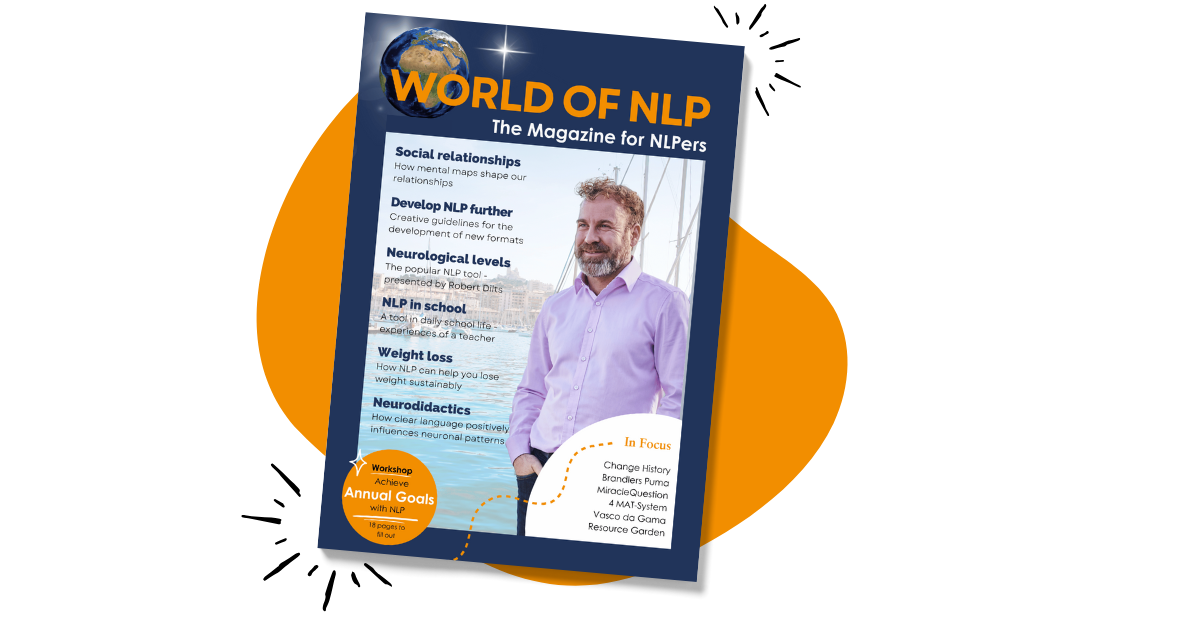
The term originally comes from medical neurology. It was integrated into NLP by Richard Bandler and John Grinder to make it clear that every human experience has a neurophysiological basis. NLP uses the term to emphasize the interaction between the brain, language, and behavior – particularly regarding perception, learning, behavioral patterns, and emotional reactions. A well-known example is Robert Dilts' “Neurological Levels” model.
Application Examples
- Anchor Work: A coach links a specific stimulus with a desired state – a new connection is created through neural facilitation.
- Timeline work: The subjective, neurologically mediated representation of time is altered to reassess memories.
- Submodalities: Change of sensory details (e.g., pitch of an inner voice) to create new meanings.
Areas of Application
- Coaching: anchor techniques, state management
- Therapy: phobia processing, trauma relief
- Learning consulting: using neurological learning strategies
- Leadership training: state management & language
- Health coaching: self-regulation with neurological reference
Methods and Exercises
- Setting anchors: Stimulus-response linkage through neural conditioning.
- Swish technique: Redirecting neural patterns.
- Submodalities work: Changing the sensory coding of inner images, sounds, sensations.
- State management: conscious control through breathing, focus, body language.
Synonyms or Related Terms
- Nervous system
- Neuropsychology
- Neuroplasticity
- Representation systems (NLP)
Distinction: Medical neurology refers to clinically measurable structures and diseases; NLP uses the term functionally and metaphorically.
Scientific or Practical Benefit
- Practically: Understanding neurological foundations increases the effectiveness of NLP interventions, utilizing neuroplasticity for change work.
- Scientifically: Insights from neuroscience (e.g., mirror neurons, embodied cognition) support parts of the NLP core assumptions.
Criticism or Limitations
- NLP often uses neurological terms metaphorically without medical precision.
- Criticism: vague or simplified transfer of neurophysiological concepts.
- The distinction from scientific neurology is not always clearly drawn.
Literature and References
- Bandler, R., & Grinder, J. (1975). The Structure of Magic I. Science and Behavior Books.
- Dilts, R. (1990). Changing Belief Systems with NLPMeta Publications.
- Andreas, C. & Andreas, S. (1987). Heart of the Mind. William Morrow.
- Roth, G. (2001). Feeling, thinking, acting. Suhrkamp.
- Doidge, N. (2007). The brain that changes itselfViking.
Metaphor
The brain is like a control panel: it receives signals from the world, processes them at lightning speed, and sends out reactions. NLP provides the manual to consciously control this control panel.