Re-Imprinting according to Robert B. Dilts
The so-called Re-Imprinting is one of the most effective NLP formats. Among other things, it is suitable for addressing severe traumas and adverse experiences from early childhood.
Table of contents
What does Re-Imprinting mean?
An imprint is a formative experience from the past from which a person has formed a belief or a bundle of beliefs. Such an imprint usually also includes an unconscious adoption of roles from other significant people who were involved.
The purpose of Re-Imprinting is to find missing resources, change the belief, and adapt the role model that was developed back then to the current, real-life circumstances of the person.
Stephan Landsiedel explains: Timeline & Re-Imprinting
Procedure
- A identifies a limiting behavior they want to change.
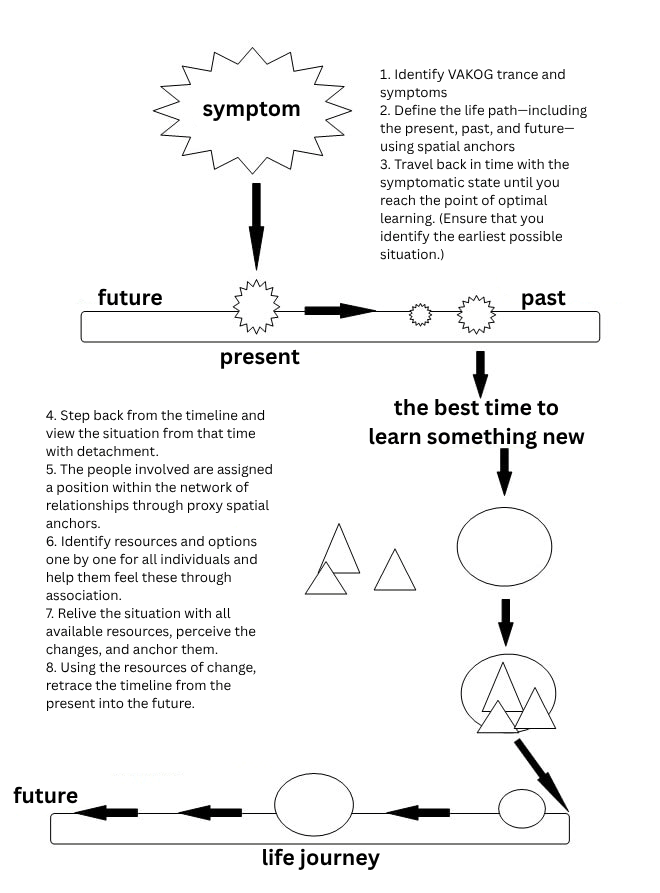
- B identifies the associated symptoms (feelings, words, images) that accompany the behavior. B elicits the underlying belief. Indicators: hopelessness, helplessness, or worthlessness. Anchor it. Also elicit the corresponding submodalities (what comes to A’s mind first) and anchor them.
- With this anchor, A now traces their life path back to the point where they had the earliest experience of that feeling/symptom. Have A find the generalisation or belief they formed based on that experience.
- Have A take one more step back to the moment before the experience occurred. Then A steps out of their timeline and returns to the present, dissociated from the timeline, looking back at the imprinting experience in the past. Ask A to notice the impact this experience has had on their later life. Also let A identify any further generalisations and beliefs they might have formed later as a result of this experience.
- Find the positive intentions, secondary gains, or beneficial effects that may have been linked to this experience. Identify significant others who were part of the experience. Some symptoms are related to the person having modelled and adopted the role of one of the people involved. Also find the positive intention behind these people’s behaviors. To discover this, you can have A simply “ask” those people in imagination.
- For all people connected with the imprint situation, go through the following steps:
- From the dissociated perspective, find the resources or choices that the person would have needed back then but did not have. You can stack resource anchors, gather experiences along the timeline, send energy or colors, etc. Use your creativity. When selecting resources, consider the logical levels.
- Have A associate into the experience of the person who needed those resources at the time. Activate the anchors/resources and let the person re-experience the entire situation with the resources in place.
- Have A step out of the timeline again and, from a dissociated perspective, re-evaluate the experience: How have the perception of the situation, the generalisations, and the beliefs formed from it changed? What new learning does A want to take from the overall experience now?
- Ask A to find the single most important resource they would have needed and anchor it. Using this anchor, guide A to a point just before the original experience. Have A let this resource flow into their younger self and then walk along the entire timeline up to the present.
“Notice the changes that have occurred through this process.”
Flowchart for Re-Imprinting
Continue reading: